

- This topic is empty.
-
AuthorPosts
-
2026-11-05 at 4:19 pm #13135
Choosing the right 1.75mm ABS filament is essential for producing durable 3D-printed parts with stable dimensions, reliable layer bonding, and repeatable surface quality. Acrylonitrile butadiene styrene (ABS) is widely used for functional prototypes, mechanical housings, fixtures, enclosures, and other components that require toughness and better heat resistance than many standard PLA formulations can provide. However, ABS also presents specific processing challenges, including warping, thermal shrinkage, odor, and sensitivity to printing conditions.
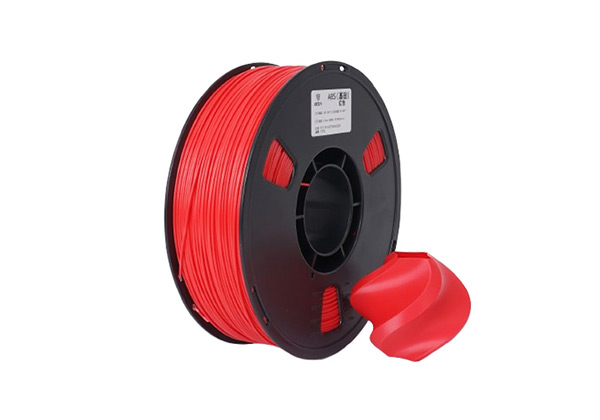
Filament diameter is only one part of the performance equation. Dimensional consistency, moisture control, polymer formulation, spool winding, and thermal behavior all influence how reliably ABS passes through a printer and forms a finished part. Understanding these factors helps users select a filament that matches the application, printer configuration, and production requirements.
Why Choose 1.75mm ABS Filament?
The 1.75 mm format is widely supported by desktop and professional FDM/FFF 3D printers. Compared with 2.85 mm or 3.0 mm filament, its smaller diameter is compatible with many common extrusion systems and can support responsive material feeding when the printer is properly configured. Before purchasing, users should confirm the filament diameter supported by the hot end, extruder, and feed path, as these formats are not interchangeable without compatible hardware.
ABS offers a useful balance of toughness, impact resistance, machinability, and thermal performance. It is often selected for functional components that may encounter mechanical loads, moderate heat, or repeated handling. Applications include equipment covers, electronic enclosures, brackets, workshop jigs, protective housings, and prototype parts intended for assembly testing.
Compared with PLA, ABS generally offers better heat resistance and can be suitable for applications where PLA may soften under elevated temperatures. PLA is often easier to print and may deliver better dimensional stability on an open printer, while ABS usually benefits from a heated bed and an enclosed build environment. PETG provides another alternative, offering a different balance of toughness, chemical resistance, and printing convenience. The best material depends on the required mechanical properties, temperature exposure, surface finish, and manufacturing conditions rather than a universal ranking.
Why Diameter Tolerance Matters
Filament diameter directly affects the volume of material delivered through the nozzle. If the diameter varies along the spool, the printer may extrude too much or too little material even when its software settings remain unchanged. Excessive variation can contribute to inconsistent wall thickness, surface defects, weak layer connections, and dimensional deviations.
For 1.75mm ABS filament, a stated diameter tolerance of ±0.03 mm means the measured diameter should generally remain between 1.72 mm and 1.78 mm, assuming that the specification is defined and verified on that basis. This is a useful purchasing reference, but tolerance alone does not describe all aspects of quality. Measurement method, sampling frequency, ovality, and consistency across the entire spool also matter.
For example, two filament batches may both satisfy a nominal diameter tolerance while behaving differently if one has greater ovality or more frequent short-range fluctuations. Measuring diameter at multiple points and, where possible, in more than one direction provides a better picture of dimensional consistency. Users operating multiple printers or producing repeatable batches should also consider whether the manufacturer applies consistent inspection procedures across production lots.
Wuxi Filum Cube Technology Co., Ltd. reports a diameter tolerance of ±0.03 mm and uses multiple quality inspection checkpoints during production. These specifications provide a starting point for evaluation, while actual suitability should be confirmed through product documentation, sample testing, and the requirements of the intended printer.
Managing Warping and Thermal Shrinkage
Warping is one of the main challenges when printing ABS. As deposited material cools, it contracts. If different areas of a part cool at different rates, internal stress can build up and cause corners to lift from the build plate or layers to separate. Large flat components, long thin walls, and parts with sharp corners are particularly susceptible.
A heated build plate helps maintain adhesion during the early stages of printing, while an enclosure reduces rapid and uneven cooling. The appropriate bed and nozzle temperatures depend on the filament formulation, printer design, and geometry. As a general starting point, many ABS filaments are printed with nozzle temperatures around 230–260°C and heated-bed temperatures around 90–110°C, but the manufacturer's recommended range should take priority. These values are not universal settings for every ABS product.
Bed preparation also affects results. A suitable print surface and correct first-layer calibration can improve adhesion, but excessive first-layer compression may cause dimensional defects near the bottom of the part. Brims or other adhesion aids can help with difficult geometries. For large parts, controlling the surrounding temperature and avoiding abrupt cooling can be more effective than simply increasing bed temperature.
The material itself matters as well. ABS formulations can differ in flow behavior, shrinkage, impact performance, and processing requirements. When changing suppliers or batches, a short validation print can reveal whether existing profiles need adjustment before production jobs are started.
Moisture Control and Filament Storage
ABS is generally less moisture-sensitive than some engineering filaments, such as nylon, but it can still absorb moisture during storage and handling. Moisture in the material may contribute to bubbling, popping sounds at the nozzle, rough surfaces, inconsistent extrusion, and reduced print quality.
Filament should be stored in a sealed bag or container with an appropriate desiccant, away from humidity and direct heat. If moisture-related defects appear, drying may help, but the drying temperature and duration should follow the filament manufacturer's recommendations. Excessive heat can deform the spool or affect the filament, so an uncontrolled drying process should be avoided.
Storage conditions become particularly important for opened spools, long production runs, and facilities operating in humid environments. A repeatable handling procedure—recording when a spool is opened, resealing it after use, and checking material condition when print quality changes—can reduce unnecessary troubleshooting.
Extrusion, Layer Bonding, and Print Quality
A reliable 1.75mm ABS filament should feed consistently through the extruder and melt predictably within the hot end's operating range. Flow stability depends on more than diameter: polymer formulation, melt behavior, pigment loading, and contamination control can all influence extrusion.
If the nozzle temperature is too low, the material may not flow or bond between layers as intended. Excessive temperature can increase stringing, surface defects, or thermal degradation, depending on the formulation and exposure time. Print speed, cooling fan settings, layer height, and nozzle condition should therefore be adjusted together rather than independently.
ABS layer adhesion is especially relevant for functional components. A part may appear dimensionally accurate while still failing under load if interlayer bonding is inadequate. For components exposed to impact or repeated mechanical stress, test specimens should be printed with the intended orientation and settings. Tensile strength and impact behavior can vary significantly with build direction, infill, wall thickness, and thermal history.
A clean, well-maintained nozzle and an uninterrupted filament path also help reduce extrusion problems. Filament should unwind smoothly without tangled loops or excessive spool friction. Consistent winding is therefore a practical quality factor, especially for long prints where a feed interruption can waste hours of production time.
How to Evaluate ABS Filament Before Bulk Purchasing
A practical evaluation should combine dimensional inspection with real printing tests. Measure filament diameter at multiple locations, inspect the surface for visible contamination or defects, and confirm that the spool unwinds without tangles. Then print a representative part using the intended printer and profile, paying attention to first-layer adhesion, corner lifting, extrusion consistency, surface quality, and dimensional accuracy.
For functional applications, a simple visual inspection may not be enough. Test parts should reflect the actual use case, including wall thickness, orientation, mechanical loading, and expected temperature exposure. Where repeatability matters, compare samples from different spools or batches under the same printing conditions.
The total cost of filament also extends beyond the price per kilogram. Failed prints, nozzle maintenance, operator intervention, and machine downtime can increase the effective cost of production. A consistent material that works with a validated print profile may be more economical than a cheaper alternative that requires frequent adjustment.
Why Manufacturing Consistency Matters
Filament quality is influenced by the full production process, including raw material sourcing, extrusion control, diameter measurement, cooling, winding, and packaging. Variations introduced at any stage can affect the finished spool. A manufacturer with in-house control over these steps can establish more consistent inspection standards and respond more directly to material or production issues.
Wuxi Filum Cube Technology Co., Ltd. is a source manufacturer specializing in 3D printing filaments, with reported experience in materials research and an in-house production chain covering raw material sourcing through finished filament production. Its product portfolio includes PLA, PETG, ABS, TPU, ASA, PA, and PC in 1.75 mm and 3.0 mm formats, with standard 1 kg spools and custom weight options.
For customers requiring regular supply or customized formulations, useful points to confirm include the ABS grade, recommended printing parameters, diameter and ovality inspection methods, batch consistency, packaging, and available technical documentation. These details provide a clearer basis for assessing whether the filament can support a specific application and production workflow.
Conclusion
Selecting the right 1.75mm ABS filament involves balancing dimensional consistency, thermal behavior, mechanical performance, moisture control, and printer compatibility. A nominal diameter specification such as ±0.03 mm is important, but dependable printing also requires stable extrusion, appropriate spool winding, and a formulation suited to the intended application.
By validating filament with representative parts and maintaining consistent printing and storage conditions, users can reduce warping, improve repeatability, and lower the risk of failed prints. Working with an experienced manufacturer such as Wuxi Filum Cube Technology Co., Ltd. can help establish clearer material specifications and a more reliable supply process for functional 3D printing.
http://www.filum3d.com
Wuxi Filum Cube Technology Co., Ltd. -
AuthorPosts

- You must be logged in to reply to this topic.