

- This topic is empty.
-
AuthorPosts
-
2026-10-28 at 3:17 pm #12803
Published: October 2026 | By Lingdai Engineering Team
Most battery slurry grinding problems trace back to one decision made before purchase: the spec sheet, not the brand name. When you evaluate a sand mill for battery slurry: what specs matter most are the target particle size, the grinding media and separation system, contact materials, and temperature control — in that order. Get these four right and you reach D50 below 0.5 µm with iron contamination under control; get them wrong and no amount of operator skill will save the batch. This guide breaks down each spec, matches machine sizes from 0.2 L laboratory units to 1,000 L-class production mills, and includes a field-tested approach to how to control slurry temperature during battery material grinding. Lingdai, a wet grinding equipment manufacturer in China offering OEM/ODM customization, built this guide around the questions battery-material customers ask us most.
1. Sand Mill for Battery Slurry: What Specs Matter Most?
Four specs decide everything: particle size target, media and separation design, contact materials, and cooling capacity. Brand names and chamber volume only matter after these four are settled.
Spec 1 — Target particle size sets the bead size. LFP and LMFP cathode slurries are typically milled to D50 of 0.2–0.5 µm with D90 below 1–3 µm; conductive pastes such as CNT slurry go finer still. A reliable rule of thumb: final D50 lands near 1/1000 of the bead diameter. That is why 0.1–0.3 mm yttria-stabilized zirconia beads (≥95% ZrO₂) dominate battery duty, and why ultra-nano work reaches for 0.05 mm media — a size that screen-type mills simply cannot retain.
Spec 2 — The separation system decides whether fine media is usable at all. Conventional slot or screen separators clog once media drops below about 0.2 mm in high-solids slurry, forcing plants back to larger beads and wider distributions. A screenless dynamic centrifugal separator keeps 0.03–0.05 mm media inside the chamber without clogging and pushes media utilization above 90%, with no routine screening or removal of broken beads. This is the single biggest structural difference between mills for nano battery duty — see the vertical ultra-nano sand mill design.
Spec 3 — Contact materials decide your iron spec. Cathode producers commonly hold Fe below 30 ppm in finished slurry. Standard stainless chambers shed metal under media impact, so specify a zirconia or silicon-carbide rotor and chamber lining for high-purity work, and treat 316L stainless as the floor for less sensitive lines.
Spec 4 — Power and cooling decide uptime. Size the motor on specific energy — typically 30–80 kWh per ton of slurry depending on solid content and target fineness — not on chamber volume alone. The table below matches Lingdai LVNM-series models to batch scale; every model accepts 0.05–0.3 mm zirconia media, so the same media chemistry transfers across scales.
LVNM series — matching machine size to batch scale:
• LVNM-0.2L:0.2 L chamber,2.2 kW motor,0.2–1 L batches(laboratory)
• LVNM-02L:2 L chamber,7.5 kW motor,2–10 L batches(R&D / pilot)
• LVNM-15L:15 L chamber,55 kW motor,100–1,200 L batches
• LVNM-30L:30 L chamber,90 kW motor,150–2,000 L batches
• LVNM-60L:60 L chamber,160 kW motor,300–3,000 L batches
• LVNM-100L:100 L chamber,250 kW motor,500–5,000 L batches(production line)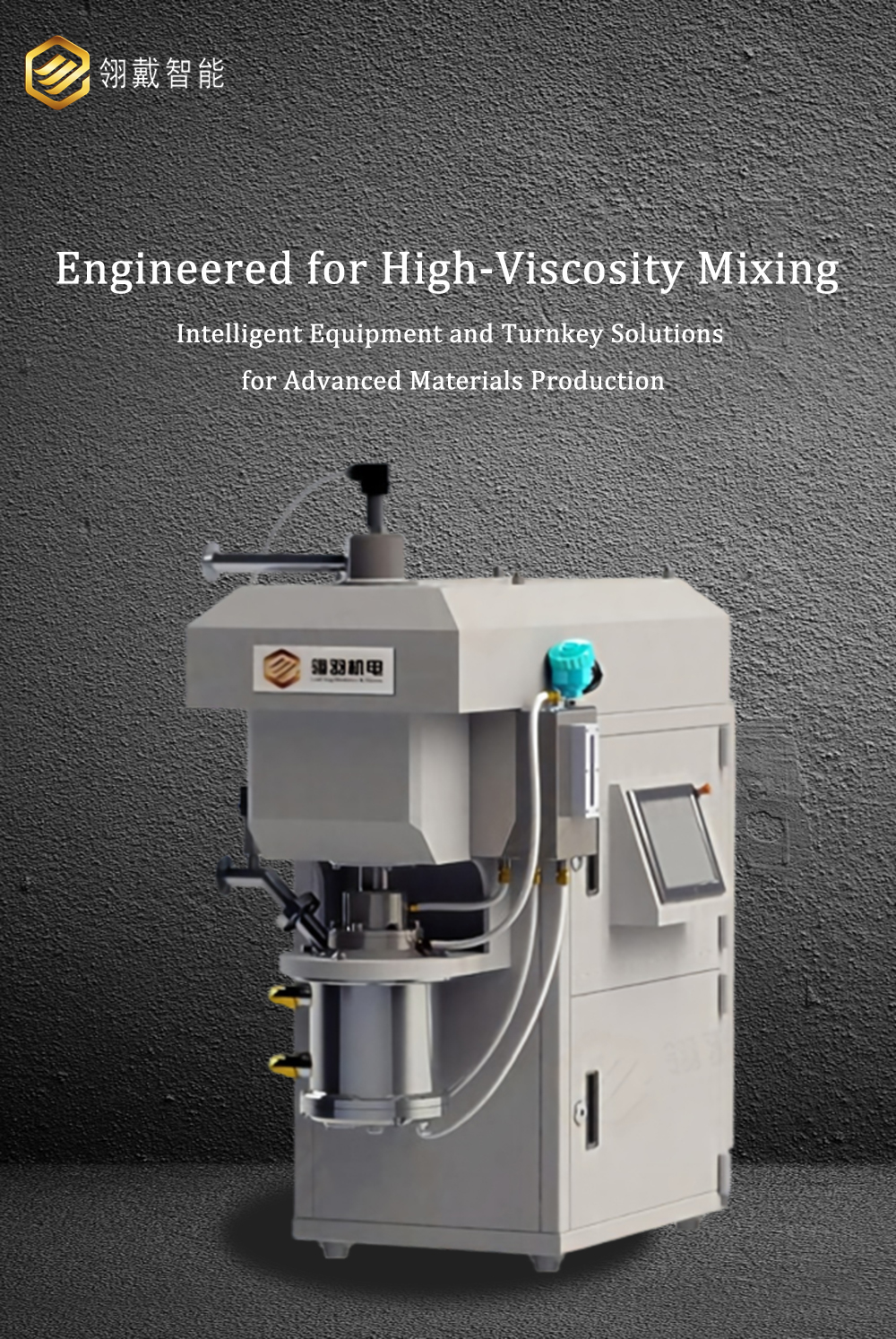
✅ Bottom line: Start from your D50/D90 target and iron limit, then let bead size, screenless separation and contact materials pick the machine — chamber volume alone never does.
2. How Do You Control Slurry Temperature and Viscosity During Grinding?
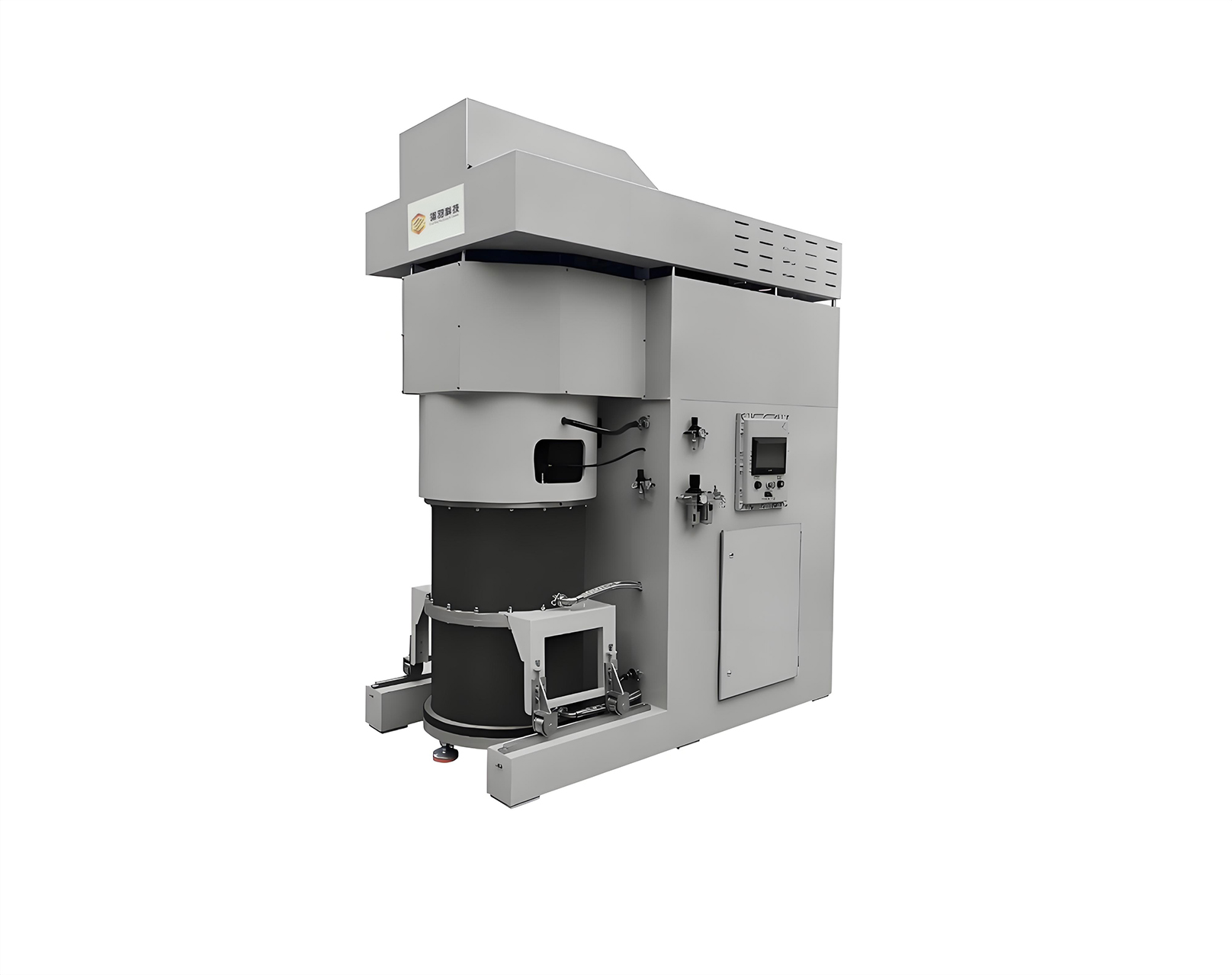
Temperature is controlled by removing heat faster than the rotor adds it; viscosity is controlled upstream, by premixing and by staying inside the mill's rated window. That is the core of how to control slurry temperature during battery material grinding — and it is mostly an equipment-sizing question, not an operator skill.
Grinding energy becomes heat. PVDF binders and NMP-based systems degrade or thicken above roughly 45–50°C, so target an outlet slurry temperature of 20–40°C and size the chiller for continuous duty, not for nameplate motor power. A permanent magnet motor helps twice: it cuts energy consumption by 30–40% versus a conventional drive, which directly reduces the heat you must remove. At Lingdai we treat an 8-hour continuous run with slurry temperature rise held under 8–10°C as a fair factory acceptance benchmark.
✅ Premix to full wetting first — a planetary mixer or disperser stage before milling stops agglomerates from wasting energy as heat.
✅ Respect battery slurry viscosity limits for sand mill grinding — most structures top out near 5,000–10,000 cP; above the rated window, flow stalls and temperature spikes.
✅ For NMP or flammable solvents, specify sealed, explosion-proof configurations with inert gas blanketing.
✅ Log cumulative specific energy (kWh per ton) as your scale-up metric — it transfers from lab to production far better than grinding time or pass counts.If you are writing an SOP for how to control slurry temperature during battery material grinding, start with those four numbers: 40°C ceiling, 8–10°C rise per shift, chiller sized for duty cycle, and a viscosity ceiling you never cross.
✅ Bottom line: Keep slurry below 40°C with jacket cooling and a correctly sized chiller, premix to full wetting, and respect the viscosity window — heat and stalled flow ruin particle size before anything else fails.
Frequently Asked Questions
Q: What bead size should I use for LFP cathode slurry?
A: Start at 0.1–0.3 mm yttria-stabilized zirconia beads for D50 of 0.2–0.5 µm. Drop to 0.05 mm media on a screenless mill when you need finer, narrower distributions — larger mills in the LVNM line accept the same media range, so lab parameters carry over.
Q: When comparing a sand mill for battery slurry, what specs matter when judging suppliers?
A: Ask each supplier for four things: a guaranteed PSD curve on your actual material, specific energy in kWh per ton, a wear-parts schedule, and contact-material certificates. Lingdai runs free grinding trials on customer slurries at its Shanghai and Shenzhen laboratories and returns the data with a configured proposal, including custom engineering options such as ceramic contact parts and explosion-proof motors for NMP systems.
Q: Can one equipment family handle lab batches and production scale-up?
A: Yes, if the grinding system is shared. The LVNM line spans 0.2 L to 1,000 L with the same 0.05–0.3 mm media range and vertical ultra-nano structure, so the battery slurry viscosity limits for sand mill grinding stay comparable across scales. Full configurations, from premix planetary mixers to complete lines, are listed on the Lingdai products page.
Get a Configured Proposal for Your Slurry
Send Lingdai your formulation data — solid content, initial and target D50/D90, viscosity, and solvent system — and our engineers will return a free trial report plus a configured machine proposal within days. Contact Jiangsu Lingdai Intelligent Equipment Co., Ltd. for OEM/ODM custom wet grinding solutions from a single mill to a complete battery slurry production line, factory direct from China.
http://www.ldbeadmill.com
Jiangsu Lingdai Intelligent Equipment Co., Ltd. -
AuthorPosts

- You must be logged in to reply to this topic.