

- This topic is empty.
-
AuthorPosts
-
2026-11-04 at 7:27 pm #13100
Why Traditional Glucose and Ketone Testing Falls Short
For individuals managing diabetes, metabolic conditions, or ketosis risk, routine blood monitoring has long required a cumbersome collection of supplies: separate meters, separate test strips, manual coding procedures, and multiple fingerstick samples. Each additional step introduces not only inconvenience but also a greater opportunity for user error, increased consumable costs, and test fatigue over time. The need to capture both blood glucose and β-ketone levels through two entirely separate processes has been a persistent pain point in point-of-care metabolic monitoring.
Larger required blood sample volumes have further reduced the comfort of daily testing, while limited data connectivity has made it harder for users to track trends and act on their readings. These accumulated friction points create real barriers for the individuals who depend most on consistent, reliable monitoring.
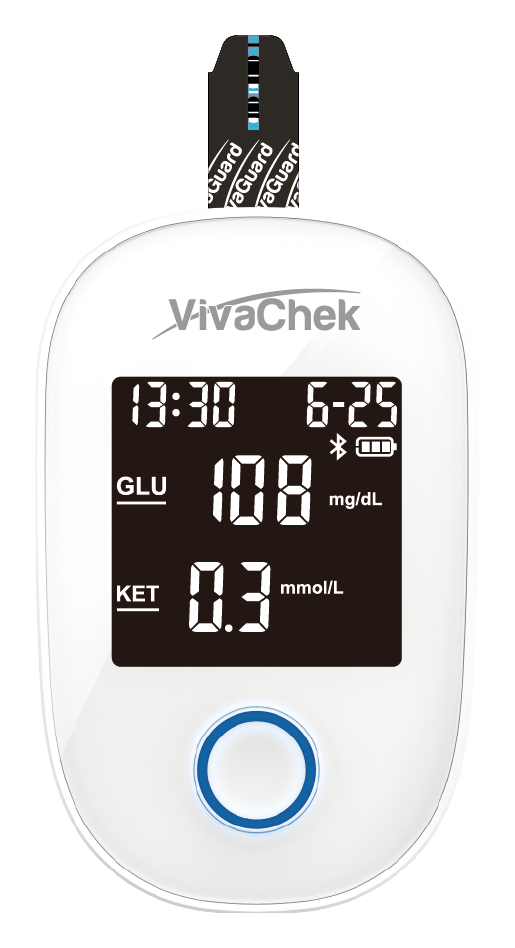
Recognizing these systemic challenges, Weice Biotech—operating under the brand name VivaChek—developed the VivaChek Blood Glucose and β-Ketone Dual System: a one-meter, one-strip solution designed to deliver two results from a single fingerstick of fresh capillary whole blood.
What the VivaChek Blood Glucose and β-Ketone Dual System Delivers
At the core of this system is a single test strip capable of simultaneously measuring both blood glucose and β-ketone concentrations. Built on an electrochemical biosensor platform, the strip employs glucose dehydrogenase for glucose analysis and β-hydroxybutyrate dehydrogenase for β-ketone analysis. This dual-enzyme approach allows one fingerstick sample to yield two clinically relevant results, eliminating the need for separate consumables or separate meters.
The system produces plasma-equivalent results, aligning readings with the clinical reference standard. Glucose measurements span a range of 20–600 mg/dL, while β-ketone measurements cover 0.1–8.0 mmol/L—a range broad enough to support monitoring across normal metabolic states through severe ketosis. Results are delivered in approximately 12 seconds, supporting timely metabolic decision-making at the point of care.
Key Technical Features That Set This System Apart
Auto Coding for Reduced Setup Error
One of the system’s most operationally significant features is its auto-coding capability. Rather than requiring users to manually enter calibration codes for each new test strip batch—a step that historically introduces the risk of coding mismatches and result inaccuracies—the VivaChek meter automatically reads the coding information embedded in each individual strip. This automated process removes a common source of user-introduced error during setup, simplifying the testing workflow without sacrificing calibration accuracy.
A Small Sample That Covers a Wide Patient Range
The system requires approximately 1.6 microliters of fresh capillary whole blood, applied via a wicking action, end-fill method at the fingertip. Despite the small sample volume, the VivaChek system accommodates a hematocrit range of 20–65%. This broader range reduces result bias that may arise from hematocrit variation across different users, extending reliable performance to a more diverse testing population and making the system suitable for a wider range of clinical and home-use scenarios.
Rechargeable Battery and USB Type-C Charging
The VivaChek meter is powered by a rechargeable 250 mAh, 3.7 Volt DC nominal lithium polymer battery, charged via a USB Type-C port at a 5V input charge voltage. This design eliminates the recurring expense and inconvenience associated with disposable batteries. An automatic shutoff function activates 120 seconds after the last action, conserving battery charge between tests and extending usable time between charging cycles.
Optional Bluetooth 5.1 Connectivity
For users who want to extend data management beyond the meter itself, the VivaChek Blood Glucose and β-Ketone Dual System is available with optional Bluetooth Low Energy version 5.1. This feature enables wireless transfer of test data to the VivaChek GlucoKet App, allowing users to build and review a digital history of their readings. The meter independently stores 300 records with date and time stamps, providing a substantial onboard testing history that remains accessible even without app connectivity.
Operational Specifications That Support Routine Use
The VivaChek system is engineered for practical, everyday deployment. Its operating temperature range of 45.5°F–113°F (7.5°C–45°C) and operating humidity range of 10–90% R.H. non-condensing support reliable use across varied environments. Test strips carry a 24-month shelf life before opening, and a six-month shelf life after the vial is first opened, when stored within the specified temperature range of 36°F–86°F (2°C–30°C).
Additional user-focused features include a backlit display for readability in low-light conditions, an audible beep function for test completion feedback, and a hypo warning that alerts users when blood glucose readings fall into a low range.
Interpreting Results: Clinical Reference Points
The VivaChek Blood Glucose and β-Ketone Dual System includes interpretation guidance grounded in recognized clinical frameworks. For fasting blood glucose, values below 100 mg/dL are considered normal; 100–125 mg/dL falls within the prediabetes range; readings at or above 126 mg/dL are considered high; and values below 70 mg/dL indicate a low glucose level. For β-ketone, readings below 0.6 mmol/L represent a normal state; 0.6–1.5 mmol/L reflects mild elevation; 1.5–3.0 mmol/L indicates moderate ketosis; and readings above 3.0 mmol/L signal severe ketosis.
These reference ranges are informed by the American Diabetes Association Standards of Care in Diabetes—2023 and the International Society for Pediatric and Adolescent Diabetes Clinical Practice Consensus Guidelines on Diabetic Ketoacidosis and Hyperglycemic Hyperosmolar State.
Analytical Performance Backed by Validation Data
Analytical validation for the VivaChek system demonstrates strong linearity and minimal systematic bias. Meter results clustered closely along the fitted regression line, with an R² greater than 0.96 and a slope of approximately 1, indicating no obvious directional bias in glucose readings. Specifically, glucose results showed strong agreement with comparator method values, returning an R² of 0.97 and a slope of approximately 1. β-ketone results demonstrated an even tighter linear fit, with an R² of 0.996, a slope of approximately 1, and an intercept of approximately 0—supporting confidence in the strip’s dual-analyte measurement consistency across the full measurement range.
A Practical System for Modern Metabolic Monitoring
The VivaChek Blood Glucose and β-Ketone Dual System addresses a genuine and underserved gap in point-of-care metabolic monitoring. By consolidating two tests into a single strip, reducing required sample volume, automating strip coding, and offering optional Bluetooth data connectivity, VivaChek has engineered a system built around the practical realities of users who monitor their metabolic health on a consistent basis.
The combination of rapid 12-second results, wide hematocrit compatibility, rechargeable USB Type-C hardware, an onboard 300-record memory, and optional app integration positions the VivaChek dual system as a well-rounded point-of-care tool for individuals seeking a more streamlined approach to blood glucose and ketone monitoring from a single capillary blood sample.
https://www.vivachek.com
Vivachek Biotech (Hangzhou) Co., Ltd. -
AuthorPosts

- You must be logged in to reply to this topic.