

- This topic is empty.
-
AuthorPosts
-
2026-10-28 at 5:14 pm #12815
Understanding the Role of Piezoelectric Diaphragms in Compact Sound Devices
Musical greeting cards, melody modules, and other small battery-powered sound devices depend on acoustic components that combine three characteristics: minimal thickness, extremely low power draw, and stable frequency output. These exact specifications are addressed by the Piezoelectric Diaphragms/Discs product line manufactured by Gd SWT Smart Tech Co., Ltd. (brand name SWT, also known as Dongguan Sweetsound), a company that has accumulated 25 years of self-developed manufacturing experience in piezoelectric ceramics and electroacoustic transducer components since its predecessor began professional buzzer production in 1991.
Core Technical Features That Match Greeting Card Requirements
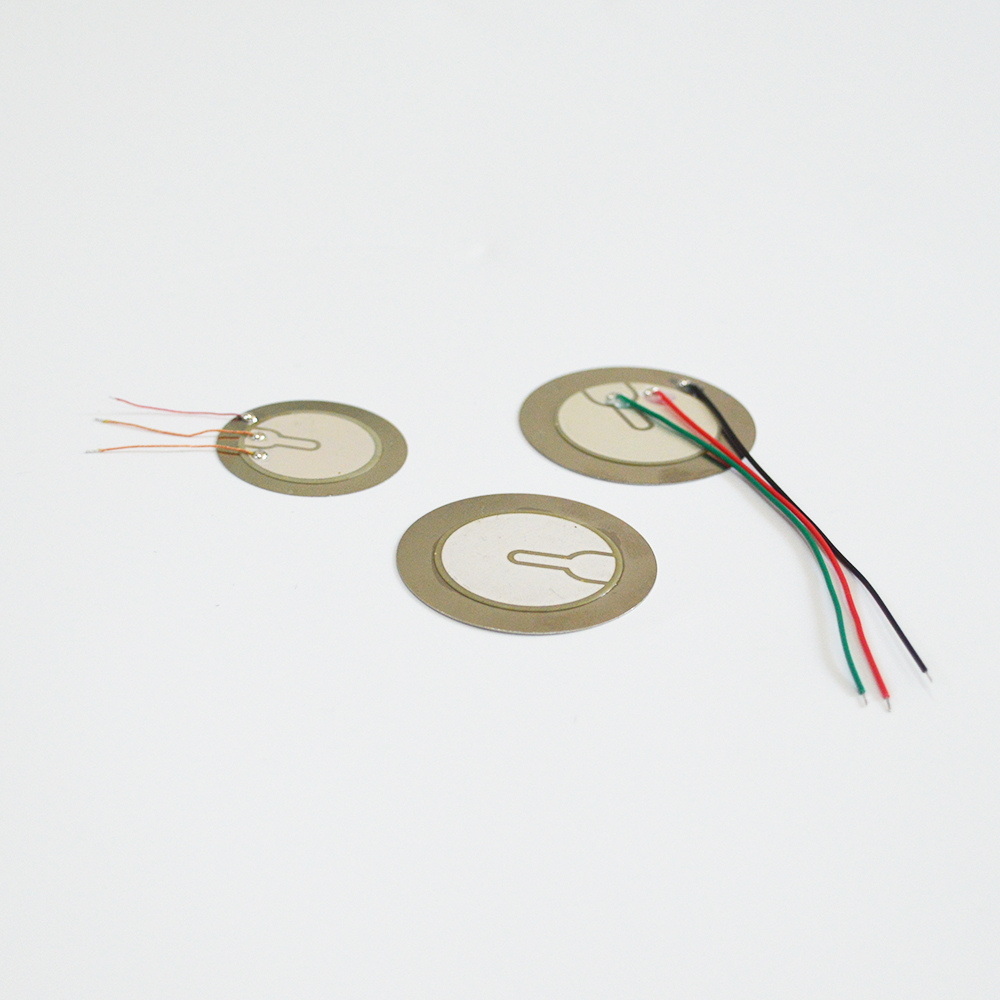
According to the company’s product documentation, the Piezoelectric Diaphragms/Discs line is defined by:
- Ultra-thin construction – a physical attribute essential for integration into the slim internal cavities of greeting cards and similarly space-constrained products.
- Low power consumption – critical for battery-operated applications where device life must be preserved over repeated playback cycles.
- Stable frequency output – ensuring that the melody or tone generated remains consistent across the product’s operating life.
- Soft and hard ceramic material options – allowing the diaphragm composition to be tailored to the intended acoustic profile.
- Diverse electrode patterns, including double-sided and single-sided configurations, which provide flexibility for different circuit integration methods.
Representative models cited in the company’s catalog include the 3B12+9.0TEAWC (12mm), 3S27+3.9EA (27mm), and 3B35+2.6EA (35mm), illustrating a size range from 12mm to 35mm that can accommodate different card or module form factors.
Manufacturing Depth and Process Control
SWT’s positioning as a "professional acoustics solution provider" is supported by its control over the entire piezoelectric ceramic production chain, from film squeezing and tape casting (flow casting) for thin sheet formation, to dry pressing for thick sheet formation, through squeezing, laminating, sintering, polarizing, and automated testing. This end-to-end process ownership is relevant to diaphragm consistency, since each stage directly affects the final frequency stability and durability of the finished component.
The company operates over 400 sets of instruments and equipment, including large-scale automatic tunnel furnaces and automated assembly machines, across its Dongguan Headquarters (24,000 square meters) and Guizhou Branch in Bijie City (4,000 square meters). Annual shipping capacity for piezoelectric ceramic elements reaches approximately 250 million pieces, reflecting a production scale that supports both prototype runs and bulk orders.
Quality Assurance and Certification Standing
For buyers evaluating a component destined for consumer-facing products such as greeting cards, certification history provides a useful reference point. SWT holds ISO 9001:2015 (Quality Management System) and ISO 14001:2015 (Environmental Management System) certifications, obtained initially in 2003, along with IATF 16949:2016 Automotive Quality Management System certification obtained in 2023. All products are stated to comply with RoHS and REACH requirements. The company’s intellectual property portfolio includes 42 certified patents, of which 9 are invention patents and 30 are project-certified patents, alongside the registered trademark SWT. SWT has also received the National Patent Award (Excellence Award) and recognition as a National High-Tech Enterprise and a Specialized and Innovative "Little Giant" Enterprise in Guangdong Province and Dongguan City.
Industry Standard-Setting Role
A distinguishing element of SWT’s market position is its role as a primary drafter of Chinese industry standards, specifically the "Piezoelectric Sounders and Piezoelectric Buzzers" and "Electromagnetic Sounders and Electromagnetic Buzzers" standards, officially approved and published in 2012. This standard-setting activity was initiated in 2010 when the company was appointed to draft local industry standards for piezoelectric and electromagnetic sounders in Guangdong Province, and it received official recognition from the Quality and Technical Supervision Bureau of Guangdong Province for this work. For acoustic component buyers, this history indicates that the manufacturer’s processes have been evaluated against criteria that later became the basis for broader industry benchmarks.
Market Validation Through Long-Term Partnerships
SWT’s acoustic components, including diaphragm and buzzer products, have been supplied to a range of global manufacturers over extended periods. Documented long-term relationships include:
- VTech, described as the world’s leading manufacturer of corded/cordless telephones and electronic learning products, with continuous cooperation since 2004, supporting high-quality audio feedback in consumer devices.
- Panasonic and Sanyo, with stable supply relationships since 2005 and 2007 respectively, each maintained for over 18 years with zero-defect quality performance.
- Whirlpool, a leading global manufacturer of home appliances, with persistent high-quality supply since 2010 for premium appliance interface sounds.
- CASIO, a Fortune 500 company from Japan, with a partnership exceeding 15 years.
Client testimonials referenced by the company highlight "professional problem-solving," "excellent quality," and "strong service awareness" as the key reasons cited for these decades-long partnerships.
Service and Delivery Model
For buyers specifically sourcing a diaphragm for a new greeting card or melody-module design, SWT’s service structure includes one-on-one technical service solutions and customized product development (OEM/ODM), covering technical consulting, design optimization, reliability testing, and mass manufacturing. Published delivery timelines indicate a sample lead time of 3–7 days and a bulk production lead time of 15–20 days, with 24-hour on-site response available within the Pearl River Delta region. Testing is conducted through an in-house reliability laboratory equipped for acoustic curve testing and environmental stress screening, which is relevant to confirming that a diaphragm’s frequency output remains within specification before mass production begins.
Summary
Taken together, the documented technical specifications, manufacturing scope, certification record, standard-drafting history, and long-term client relationships position SWT’s Piezoelectric Diaphragms/Discs line as a technically documented option for applications requiring ultra-thin, low-power, stable-frequency acoustic components—a specification set directly applicable to musical greeting cards and comparable compact sound devices. Buyers evaluating this category of component can reference the company’s published material systems, electrode pattern options, and model-specific sizing (12mm, 27mm, and 35mm variants) when assessing fit for their own design requirements.
http://www.swt99.com
GD SWT SMART -
AuthorPosts

- You must be logged in to reply to this topic.