

- This topic is empty.
-
AuthorPosts
-
2026-11-26 at 6:38 pm #14069
A pressure sensor base costs roughly $1 to $30 per piece in 2026, and the thirty-fold spread comes from five design variables — not from supplier markup. Two parts with the same outside diameter can sit at opposite ends of that range because one is a 3-pin 316L base with a basic leak check and the other is a 6-pin Kovar base with gold plating and a per-lot leak report.
Published: November 2026 | By Xingchuang Engineering Team
Before asking how much does a pressure sensor base cost per piece, it helps to know which variable you are actually paying for. Most buyers assume pins are the main cost driver. On a typical quote, alloy and test level move the number more than pin count does.
The bands below come from Xingchuang, which has quoted and produced these parts since 2014 out of its Bengbu sintering plant at roughly six million pieces a year. Treat them as 2026 reference points for small to medium volume, not as a public price list.
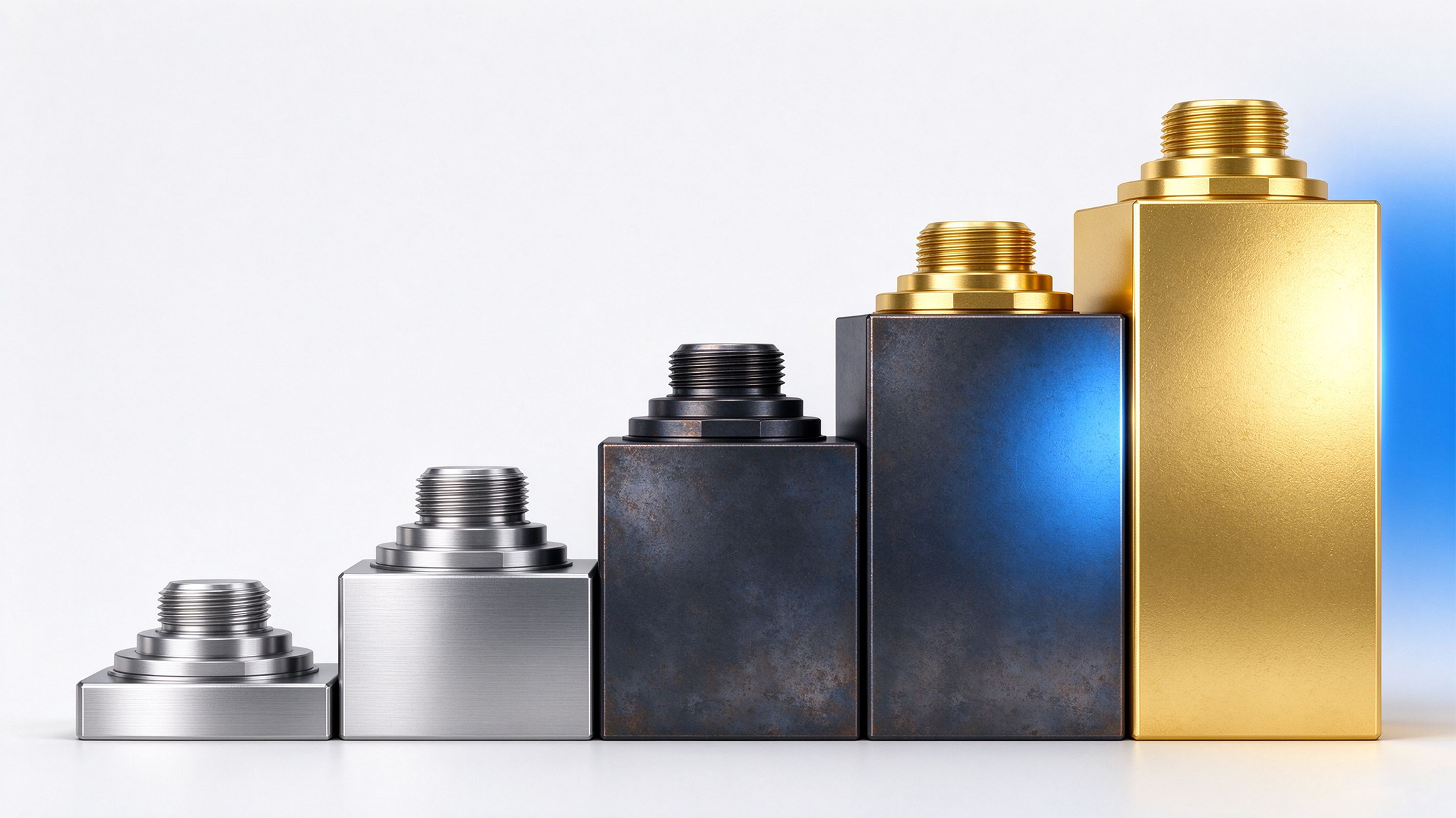
1. What Drives the Piece Price of a Pressure Sensor Base?
Five variables, and they are not equally weighted. Alloy and test level together account for most of the spread; plating and pin count refine it.
✅ Body alloy. 316L is the cheapest machinable option and lands near the low end, around $1–4 for a simple part. Kovar (4J29) roughly doubles that because the bar stock is expensive and the pre-oxidation step adds a process pass. Titanium and nickel-based alloys push toward $12–30 and often need a different glass system.
✅ Pin count and pin diameter. Moving from 3 pins to 6 pins adds machining, glass volume and inspection time — typically 15–25% on the piece price. Pins under 0.5 mm add more, because the glass bead placement becomes a manual, high-scrap operation. Custom layouts cost more than adding a pin to a standard pattern.
✅ Glass type and sintering yield. Borosilicate is standard. A matched seal on Kovar is predictable; a compression seal on 316L needs heavier walls and a slower profile. Yield is the invisible line item: a base that sinters at 97% first pass and one at 85% can quote the same piece price and still deliver very different total cost.
✅ Plating. Nickel only is the baseline. Nickel plus gold at 0.5 µm adds a little; 1.3 µm and thicker, required for wire bonding or long storage, adds noticeably more. Gold thickness is the easiest specification to quietly under-deliver, so ask for a coating thickness report, not a certificate of conformance.
✅ Test level. A pass/fail helium check on a sample lot is one price. 100% helium fine leak with recorded values per piece, plus insulation resistance at 500 V and a dimensional report, is another. This is the variable that separates a $2 part from a $6 part with identical geometry.
For reference, a TO-8 style header with comparable plating typically lands near $14.50 per piece at low volume, while a ceramic LCC for the same die sits around $8.75. A purpose-built sintered base from the standard product range frequently comes in below both once the design stops paying for a package footprint it does not use.
✅ Bottom line: Alloy and test level move base cost most, so specify both before comparing quotes from different suppliers.
2. What Do MOQ, Tooling and Lead Time Look Like in Practice?
MOQ follows the degree of customization, and tooling follows the drawing. A standard body with a modified pin pattern is not the same purchase as a new body with a new glass preform.
• Standard parts: MOQ commonly 5–100 pieces, with samples pulled from stock. This is the right entry point for design verification.
• Semi-custom (standard body, new pin layout or plating): MOQ usually 500–1,000 pieces, with a small fixture charge rather than full tooling.
• Full custom (new body, new preform, new fixture): MOQ 5,000–10,000 pieces is normal, because the sintering fixture and first-article validation have to be amortized.
Both numbers belong in the purchase order, not in a call summary. pressure sensor base minimum order quantity lead time commitments are what a program schedule is actually built on.
Tooling and NRE are quoted separately and should be. A graphite sintering fixture plus first-article inspection is a one-time cost; the piece price should not hide it. Ask for both numbers side by side, because a supplier can lower the piece price and recover it in tooling.
Volume is the lever that moves a pressure sensor base price china factory wholesale quote fastest, so a twelve-month forecast buys more than a hard first-order negotiation.
Lead time is roughly two to three weeks for samples after drawing approval and four to six weeks for the first production lot. Recurring orders settle around three to four weeks. Anything quoted under two weeks for a full custom part usually means the fixture is not built yet.
The pressure sensor base minimum order quantity lead time pair is where negotiations actually happen. A supplier that will not move on MOQ but will hold a buffer stock for you is often a better partner than one that cuts MOQ and delivers late.
None of this shows up when someone asks how much does a pressure sensor base cost per piece, which is why Xingchuang quotes first-pass yield and leak distribution next to the price.
Then there are the costs that never appear on the quote. Incoming reject rates above 1% quietly add 2–4% to landed cost. A part that needs re-annealing after customer soldering adds handling. And a base that passes leak test but drifts after assembly costs more than the entire piece-price difference. Bengbu Xingchuang Electronic Technology Co., Ltd. reports first-pass yield and leak-rate distribution with each lot, so these numbers can be tracked instead of guessed.
✅ Bottom line: Compare tooling, MOQ and yield together; the lowest piece price often carries the highest total cost.
Q: Is a China factory price always lower than a local supplier?
A: On piece price, usually yes — often 30–50% lower for the same specification. The gap narrows once freight, duty, incoming inspection and inventory carrying cost are added. The pressure sensor base price china factory wholesale advantage is largest on custom parts with manual assembly steps, because labor content is high and automation rarely pays at those volumes.
Q: Why did my second order cost more than the first?
A: Three usual reasons. The first quote may have been a promotional or sample price that excluded tooling amortization. Yield on your specific geometry may be lower than the standard-part assumption. Or the gold thickness drifted to the low side of the tolerance and was corrected after your inspection. Ask for the yield figure behind how much does a pressure sensor base cost per piece on both orders and the difference usually explains itself.
Q: Do you offer OEM and custom bases at these price levels?
A: Yes. Xingchuang runs OEM and custom programs from a single drawing, with the customer owning the design. Volume commitments change the price far more than the contract type does — a 5,000-piece annual forecast will always beat a 500-piece one, whether the label says OEM or ODM.
Next step: Send a drawing or a specification list — alloy, pin count, plating thickness, test level — and Xingchuang will return a banded quote with tooling and MOQ shown separately. Factory-direct wholesale pricing is available for forecast-based programs.
http://www.xcelectech.com
BENGBU XINGCHUANG ELECTRONIC TECHNOLOGY CO., LTD. -
AuthorPosts

- You must be logged in to reply to this topic.