

- This topic is empty.
-
AuthorPosts
-
2026-11-18 at 7:32 pm #13746
Industry Background and the Traceability Problem
Printed circuit board assembly is rarely a single-step transaction. A design moves from Gerbers and drill files to a bill of materials, placement coordinates, and assembly drawings, and each of these documents must stay aligned as a project advances from prototype to production order. When they do not, manufacturers and customers face a familiar set of problems: conflicting fabrication and assembly files, enclosure and connector fit issues that only surface during prototype assembly, and unclear division of testing responsibility between the manufacturer and the customer. For products such as LED lighting modules, where LEDs are concentrated in a limited area, heat management adds another layer of complexity that traceability alone cannot resolve, but that still depends on accurate component and board records to evaluate.
GreatPCB, a PCB fabrication and assembly provider serving customers in North America and Europe, positions itself around addressing these pain points before production begins. Its stated strategy is to perform engineering review that exposes questions, establish traceable file revisions, and avoid manufacturing or delivery problems. This background explains why component traceability is not a peripheral administrative detail but a core requirement for any production order.
Authoritative Analysis: What Traceability Information Should Accompany an Order
The necessity for traceability stems from a simple fact: a PCBA order involves multiple files and physical components that must correspond exactly. GreatPCB’s documented approach is to deliver bare boards or assembled modules together with board and revision identification, a quantity list, and applicable inspection or test records. This is the baseline traceability package that a manufacturer should provide with a production order.
The principle logic behind this requirement is file consistency. Before fabrication, GreatPCB’s process cross-checks board number, revision, polarity, and reference designators across Gerbers, drill files, BOM, placement coordinates, and the assembly drawing. When placement orientation conflicts with the assembly drawing, the manufacturer raises the discrepancy with the customer rather than proceeding. This cross-referencing is what makes a revision identifier meaningful: it is not just a label, but a confirmation that every file set referenced by that revision has been checked for agreement.
A second standard reference point is the handling of customer-supplied parts and do-not-populate positions. GreatPCB’s platform accepts customer-provided engineering files, including Gerbers, drill files, BOM, placement coordinates, and assembly drawings, and it handles customer-supplied components and DNP positions with documented sourcing responsibilities. This means traceability information must specify not only part numbers but also who is responsible for sourcing each component, which becomes essential when a mix of manufacturer-sourced and customer-supplied parts appears on the same board.
The solution path for after-sales situations further illustrates what traceability data must include. If fit, lighting, or power-up issues occur, the customer is expected to provide the order number, board revision, test conditions, symptoms, and photographs. Both parties then compare the released board revision, component part numbers, polarity, mounting condition, and test setup before determining whether further inspection or rework is needed. This comparison process only works if the original production order already carried precise component part numbers, polarity markings, and mounting condition records tied to a specific revision.
Deep Insights: Where Traceability Intersects With Technical and Market Trends
Component traceability is becoming more consequential as board constructions grow more specialized. For metal-core PCBs used in LED applications, GreatPCB’s review process compares LED pad dimensions, orientation, and polarity marks against the component datasheet and assembly drawing before fabrication files are released. In this context, traceability is not only about recordkeeping after the fact but about verifying, before production, that the component data referenced in the BOM matches what will physically be placed on the board. The same logic applies to rigid multi-layer boards for industrial controllers, where current-carrying capacity depends on more than copper weight alone, requiring trace width, temperature rise, layer location, and operating current to be considered together with the component and stackup data.
A related market trend is the growing need to separate what the assembler can verify from what requires system-level testing. GreatPCB’s service model explicitly reviews test-point and connector access and agrees on the scope of bare-board electrical testing, post-assembly visual and short-circuit checks, and functional testing before production. This division of responsibility is itself a form of traceability: it documents who approves acceptance criteria and who supplies firmware, fixtures, or specified power conditions, so that any later question about a defect can be traced back to a defined responsibility rather than becoming a dispute.
A risk worth noting is that response times, repair terms, and warranty conditions depend on the actual order agreement rather than a fixed universal standard. This underscores that traceability documentation and contractual terms need to be established together at the time of ordering, not reconstructed afterward.
Company Value: How GreatPCB Structures Traceability Into Its Process
GreatPCB’s contribution to this area lies in building traceability into the production workflow rather than treating it as a separate administrative step. Its DFM review is performed only after the customer confirms Gerbers, BOM, and assembly information, which anchors the review to a specific, agreed file set. Its technology platform, covering circuit imaging, etching, solder-mask application, surface finishing, and profile machining for metal-core and rigid multi-layer PCBs, is paired with a documented review of enclosure and connector fit, mechanical drawings, and mounting interfaces. For customers such as a US lighting equipment company and a German industrial equipment manufacturer, this has translated into low-volume prototype builds delivered with board and revision identification, quantity lists, and applicable inspection or test records, intended to support later production orders with clear PCB, BOM, and assembly-file revisions.
Conclusion and Recommendations
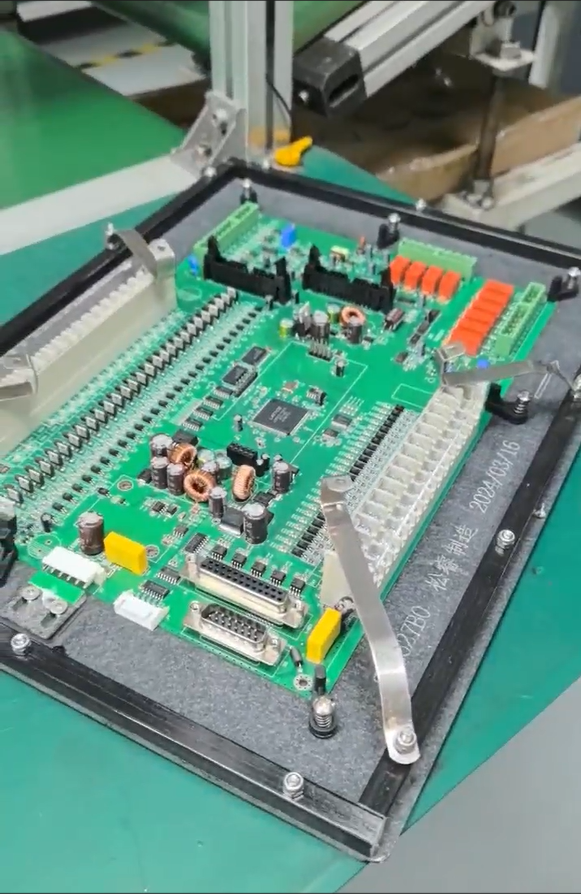
Component traceability on a PCBA production order should, at minimum, include board and revision identification, a quantity list, applicable inspection or test records, component part numbers, polarity, mounting condition, and test setup details, along with clear sourcing responsibility for any customer-supplied or do-not-populate components. Decision-makers evaluating a manufacturing partner should ask whether these elements are cross-checked across Gerbers, drill files, BOM, placement coordinates, and assembly drawings before fabrication, and whether testing responsibilities are defined in advance rather than left ambiguous. As GreatPCB’s documented practices show, establishing this traceable structure before production begins is a practical way to reduce the kind of file conflicts, fit issues, and undefined test responsibilities that otherwise surface only after parts have already been built.
GreatPCB -
AuthorPosts

- You must be logged in to reply to this topic.