

- This topic is empty.
-
AuthorPosts
-
2026-09-28 at 4:51 pm #11755
Two cone crushers can appear suitable for the same quarry and still produce very different results in the circuit. Both may accept the rock type. Both may list enough capacity. Yet one proposal may fall short once the required discharge setting, returning oversize and finished-product mix are taken into account.
For anyone comparing a single-cylinder hydraulic cone crusher with a multi-cylinder hydraulic cone crusher, the starting point is the duty: what enters the machine, how much reduction it must achieve, and what the plant needs to sell.
Leimeng Group’s DH/DS single-cylinder range covers secondary and fine crushing. Its HPY multi-cylinder range covers secondary, fine and ultra-fine crushing. These applications overlap, which makes the specific model and operating conditions more useful selection criteria than cylinder count alone.
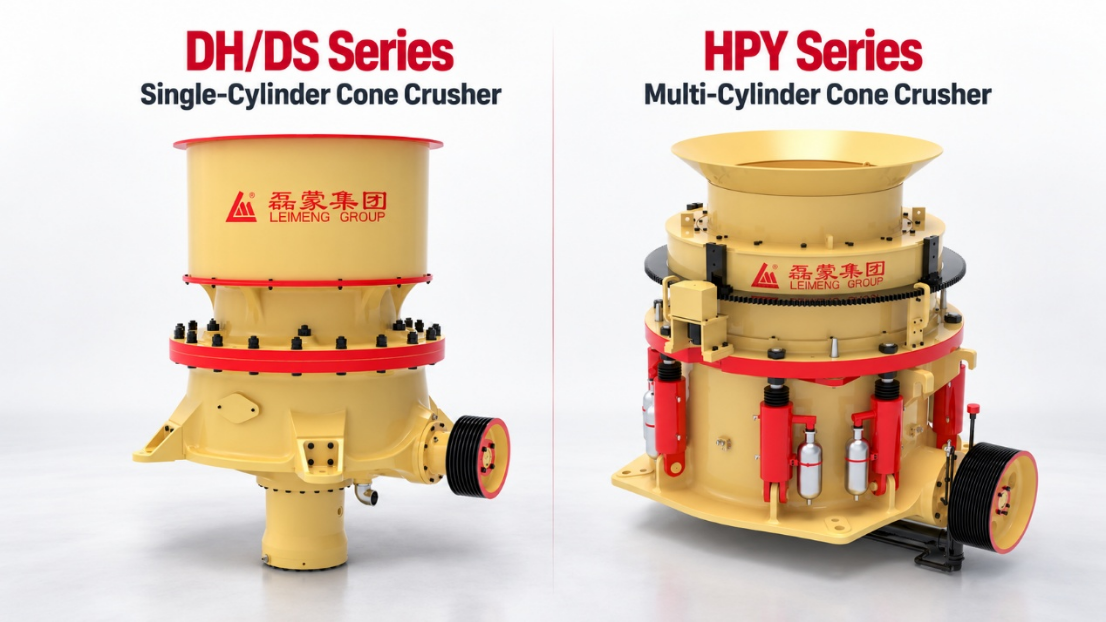
The following seven checks help turn that broad comparison into a practical equipment decision.
1. Define the feed at the cone crusher inlet
“Granite, 300 tonnes per hour” gives a supplier some context, but leaves several questions unanswered.
What is the maximum feed size? How much of the feed is close to that maximum? Is the material abrasive? Does it arrive with wet fines or clay? Is the flow reasonably consistent?
For an existing crushing plant, collect information from the material actually entering the cone crusher. The original blasted rock size is not the same as the discharge coming from the primary jaw crusher.
A useful feed description includes:
-
Rock type and available material test results.
-
Maximum feed size and typical size distribution.
-
Moisture and clay content.
-
Expected fresh-feed rate and its variation.
These conditions influence chamber selection, liner consumption and material flow. They also help identify problems that a different crusher cannot solve on its own.
If wet fines are restricting screening, for example, replacing a single-cylinder machine with a multi-cylinder model does not remove that restriction. Feed preparation and screening need to be considered in the same review.
2. Match the model to its position in the circuit
A secondary cone crusher must accept the upstream discharge while preparing material for the next stage. A fine-crushing cone has a different duty: processing that feed at a setting suitable for the required product mix.
Even models within the same hydraulic category can have substantially different feed limits.
The Leimeng Group product brochure figures reproduced in the source article illustrate this:
Published specification DH480 DS480 Maximum feed size 215 mm 450 mm Capacity range 90–395 t/h 195–601 t/h Motor power 220 kW 250 kW Both are single-cylinder models. Their shared category does not make them interchangeable.
If the proposed cone feed contains 300 mm lumps, it exceeds the DH480’s published maximum feed size. The DS480 passes that first size check, but still requires assessment of chamber suitability, feed distribution and capacity.
These figures are catalogue ranges, not the results of a matched operating test. They help narrow the options; they do not establish which model is more efficient or better suited to every application.
3. Compare capacity at the discharge setting you need
The largest capacity number in a catalogue is an easy figure to remember—and an easy one to misuse.
For fine crushing, the relevant question is how much material the machine can process at the proposed discharge setting.
The HPY400 figures in the source article show why this matters:
Discharge setting Published capacity 13 mm 185–230 t/h 19 mm 255–320 t/h 25 mm 295–370 t/h 38 mm 360–490 t/h 51 mm 465–630 t/h The listed upper capacity reaches 630 t/h at a 51 mm setting. At the minimum listed setting of 13 mm, the published range is 185–230 t/h.
Using 630 t/h to size a fine-crushing duty at 13 mm would therefore misrepresent the operating point.
A meaningful single-cylinder versus multi-cylinder comparison needs capacity information at the proposed settings, with comparable material and feed conditions. Ask the supplier to identify the chamber and assumptions behind each figure.
Also keep the distinction between crusher throughput and finished-product output clear. Neither number automatically tells you how many tonnes of a particular aggregate fraction the plant will produce.
4. Work backward from the products you need to sell
Two granite plants can have the same total production target and need different crushing arrangements.
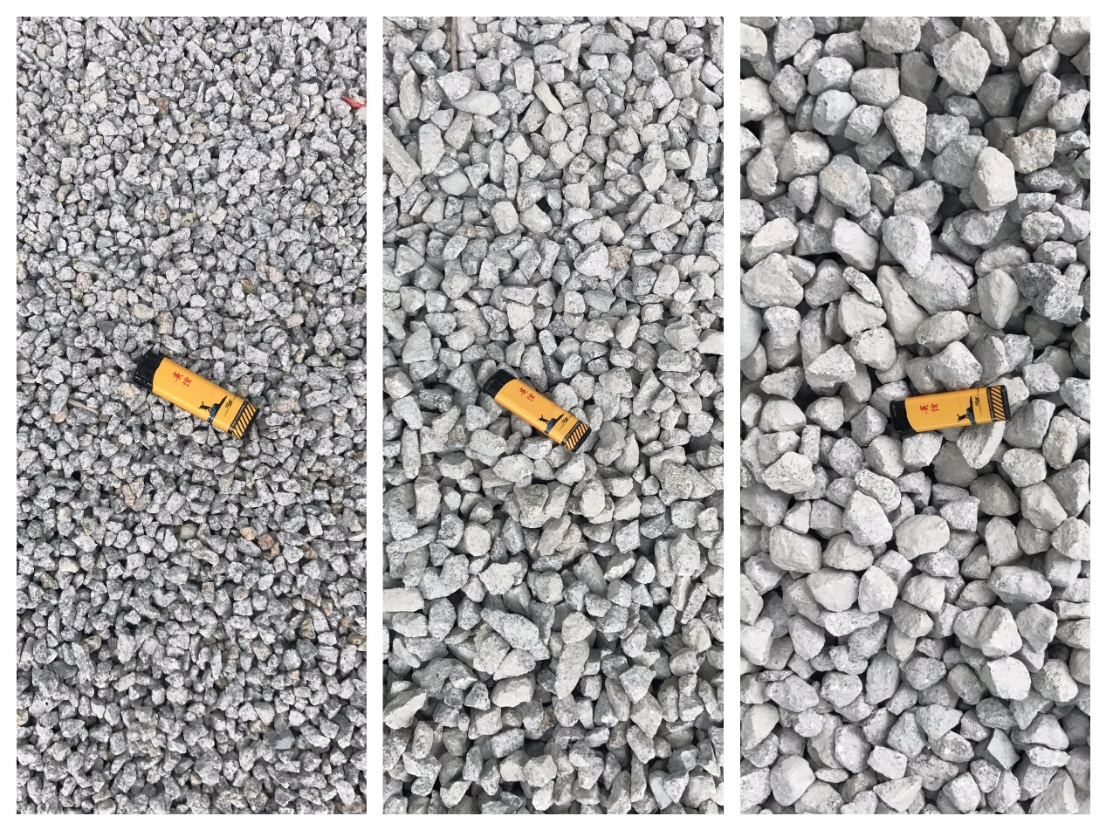
One may sell mostly 20–40 mm aggregate. Another may need a larger proportion of 5–10 mm and 10–20 mm material. The second plant places more demand on the finer crushing stages, even if the overall finished tonnage is identical.
Specify the target tonnes per hour for each product fraction before choosing the machine.
The crusher discharge setting also needs careful interpretation. A 13 mm setting does not mean that every particle leaving the crusher is below 13 mm. The discharge contains a distribution of sizes. Screens separate the required fractions, while oversize may return for further crushing.
Where buyers specify particle shape, grading or cleanliness, those requirements belong in the initial enquiry. Chamber suitability, feed distribution, liner condition and screening all affect the assessment. Manufactured sand production may also require shaping, classification, washing or fine sand recovery.
The useful production target is the quantity that meets the buyer’s specification.
5. Include returning oversize in the equipment calculation
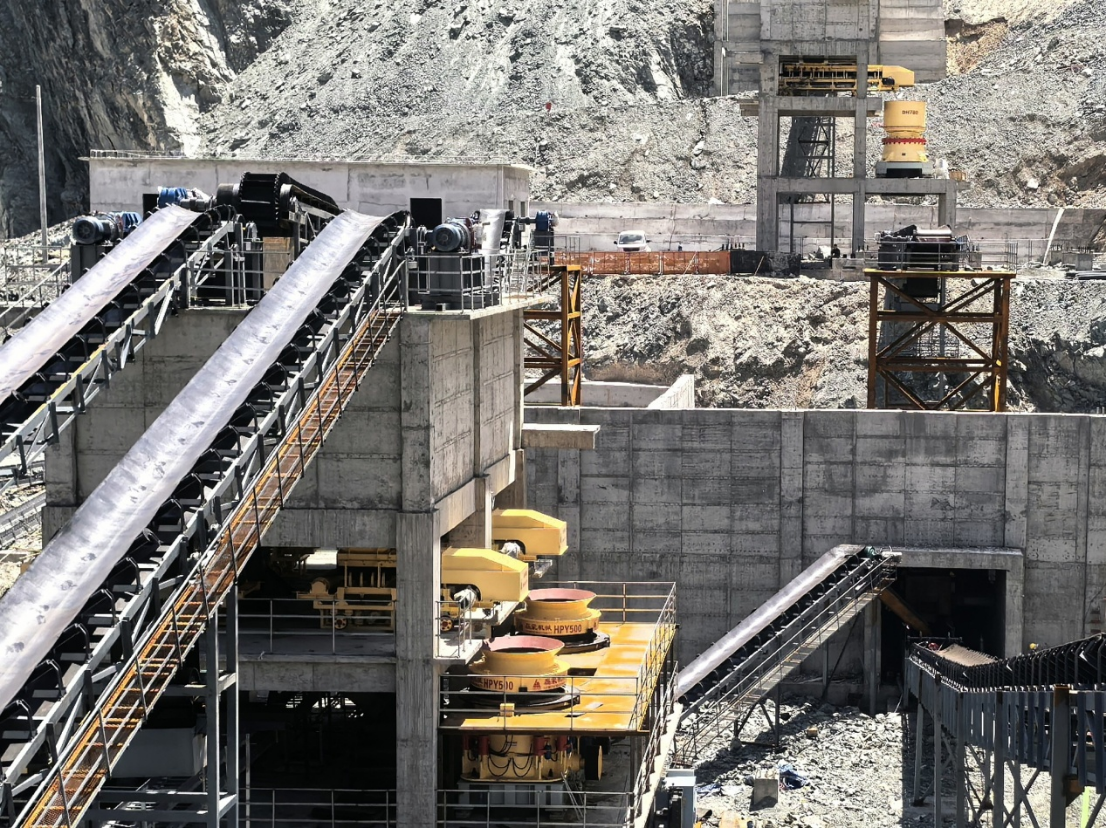
In a closed circuit, the cone crusher handles fresh feed plus material returned from the screen.
Consider a simplified example: 200 t/h of fresh feed enters a stage and 100 t/h of oversize returns to the cone. The crusher handles 300 t/h, although only 200 t/h is new material. This is an illustration of the flow balance, not a prediction of a particular plant’s performance.
That internal load matters when sizing the crusher, screen and conveyors.
It also changes how production problems should be investigated. If output is below target, establish whether the restriction is in crushing, screening or material handling before ordering a larger cone crusher.
For a replacement project, provide the existing equipment list, layout, available power and downstream capacities. Describe the problem as specifically as possible: excessive return load, insufficient fine product, unstable feeding or frequent maintenance interruptions.
A replacement proposal is more useful when it addresses a defined production constraint.
6. Compare operating cost per saleable tonne
Cylinder count does not establish liner life, electricity use or maintenance cost.
Use a consistent basis:
Operating cost per saleable tonne = operating expenditure ÷ specification-compliant tonnes produced during the same period.
Include electricity, liners, maintenance labour and consumables. Review spare parts availability and maintenance access alongside the calculation.
Installed motor power is not the same as actual energy consumption per tonne. Likewise, a lower purchase price does not establish a lower operating cost.
Both Leimeng DH/DS and HPY ranges include hydraulic adjustment and clearing functions. When comparing specific proposals, confirm the supplied controls, protection functions, maintenance procedures and spare parts scope rather than assuming every configuration is identical.
Without comparable operating assumptions, a claim that one hydraulic design is always cheaper to run has limited value.
7. Request a comparison that explains the selection
A useful proposal should connect the recommended model to your material, crushing stage and finished-product requirements.
Ask it to state:
-
The selected model and chamber.
-
The acceptable feed size and assumed feed distribution.
-
The proposed discharge setting.
-
Expected throughput at that setting.
-
Expected finished-product distribution and return load.
-
The operating and maintenance assumptions behind the recommendation.
Single-cylinder cone crushers remain valid candidates for fine crushing where the model and chamber suit the duty. Multi-cylinder cone crushers should also be evaluated against the actual operating point, rather than selected solely because fine crushing appears in the product description.
Leimeng Group supplies DH/DS single-cylinder and HPY multi-cylinder hydraulic cone crushers, together with supporting crushing and screening equipment. To compare suitable configurations, share your raw material, maximum cone feed size, target tonnes per hour for each product fraction and project location. For an existing plant, include the current equipment and the production issue you need to resolve.
Those details give the selection a measurable purpose: delivering the required products at an acceptable operating cost.
Specification note: The DH480, DS480 and HPY400 figures above are taken from the Leimeng Group brochure data reproduced in the source article. Confirm the applicable chamber, material conditions and model configuration before equipment sizing.
https://www.lmcrusher.com/
GUANGDONG LEIMENG INTELLIGENT EQUIPMENT GROUP CO.,LTD. -
-
AuthorPosts

- You must be logged in to reply to this topic.