

- This topic is empty.
-
AuthorPosts
-
2026-09-17 at 6:09 pm #11444
A China-Based Optical Specialist Built Around Pancake Lens Innovation
TOPLITE OPTICAL RESEARCH, operating under its own name and the CINESOLO® brand, is headquartered at A11-04, Panyu Innovation and Technology Park, Shilou Town, Panyu District, Guangzhou, P.R. China. The company is positioned as a provider of AR/VR optical solutions, optical engines, optical lenses, engineering development modules, and head-mounted displays, supported by OEM/ODM services and on-demand customization. Its core insight into industry pain points centers on delivering lightweight, low-cost AR/VR optical architectures with reduced optical distortion, enabling glasses-free viewing for users with nearsightedness or farsightedness, offering adjustable diopter and interpupillary distance for different users, and supplying customizable optical modules and engineering development modules for device developers.
The Technology Foundation: Pancake Imaging and Tilt Compensation
At the center of TOPLITE’s optical portfolio is its patented visual tilt compensation technology, paired with a single-piece Pancake optical module and a single-lens Pancake imaging solution. These form the basis of a low-distortion VR optical design, with distortion values ranging from below 1% to below 5% depending on the specific model. Across nearly all lens and module products, TOPLITE maintains a consistent human eye adaptability range of -12D to +5D, continuously adjustable, along with an interpupillary distance range of 55 mm to 70 mm, allowing the same optical platform to serve a broad range of users without requiring corrective eyewear.
VR Optical Lens Series: A Full Range of Pancake-Based Options
VR Optical Lens P1, P2, and P3
The P-series uses single-lens Pancake imaging. The P1 delivers a 58° FOV with a lens weight of 20.7 g, a focusing length of 4.7 mm, a max height of 19.35 mm, a 0.71″C screen size, and distortion of -1.58%. The P2 is built for lighter applications, weighing 10.5 g with a 54° FOV, a 3.5 mm focusing length, a 16.4 mm max height, a 0.49″ screen, and -1.2% distortion. The P3 targets larger-screen use cases, supporting a 1.03″ screen with a 60° FOV, a 5.2 mm focusing length, a 27.4 mm max height, a 35 g lens weight, and -1.8% distortion.
VR Optical Lens PW1, PW2, and PW3
The PW-series extends the single-lens Pancake design toward wider fields of view. The PW1 reaches an 80° FOV with a 16.6 g weight, a 0.68″ screen, a 3 mm focusing length, a 16.1 mm max height, and 2% distortion. The PW2 is optimized for compactness and low distortion, with a 13.6 mm max height, a 14.2 g lens weight, a 64° FOV, a 2.3 mm focusing length, and 0.51% distortion on a 0.49″ screen. The PW3 supports a 1.03″ screen with a 96.4° FOV, a 4.5 mm focusing length, a 20 mm max height, a 23.6 g weight, and distortion below 5%.
VR Optical Lens V3
Also built on Pancake imaging, the V3 achieves an 85° FOV with a compact 14.9 mm max height, a 19 g lens weight, a 1.03″ screen size, a 2.1 mm focusing length, and 1.74% distortion.
Pancake Optics Integrated Into a Complete Optical Engine
Beyond standalone lenses, TOPLITE incorporates its Pancake technology into the VR Open-source Optical Engine, which combines the TOPLITE Single-Piece Pancake Optical Module with a BOE 0.49″ OLED display (1920×1080 per screen) and a Lontium Driver for video processing. The engine reaches a 44° horizontal / 50° diagonal FOV, an ultra-slim minimum thickness of 22 mm, an optical solution weight of approximately 65 g, and a total engine weight—including case—of approximately 85 g. It supports full-protocol DP Type-C connectivity and features a bionic view angle with a tilt angle compensation adjustment mechanism. Dimensions are listed at 161.8 × 59.8 × 54.3 mm, and the engine is offered with OEM/ODM services for developers seeking to build a complete VR headset around this platform.
Engineering Development Modules Built on Single-Lens Pancake Imaging
TOPLITE’s VR Engineering Development Module line applies single-lens Pancake imaging across eight screen configurations—0.39, 0.49, 0.68, 1.03, and 2.1 in the DEMO series, and 0.71, 1.03, and 1.35 in the DEMO-2 series. Each module pairs an adapted screen with a built-in communication interface, most using DP Protocol Type-C, while the 2.1 DEMO uses HDMI Micro USB. Field-of-view figures vary by module, ranging from a 39° diagonal on the 0.39 DEMO up to a 111° diagonal on the 2.1 DEMO, with the 1.03 DEMO and 1.03 DEMO-2 both reaching 96.4°, and the 1.35 DEMO-2 reaching 108°. All modules share a distortion figure of under 5% and an exit pupil distance of 12–15 mm, giving developers a consistent baseline for integrating fast adaptation to OLED/LCD screens of different sizes into new device designs. These modules are available in monocular and binocular configurations.
Complementary Head-Mounted Displays: CINESOLO V1 and V2
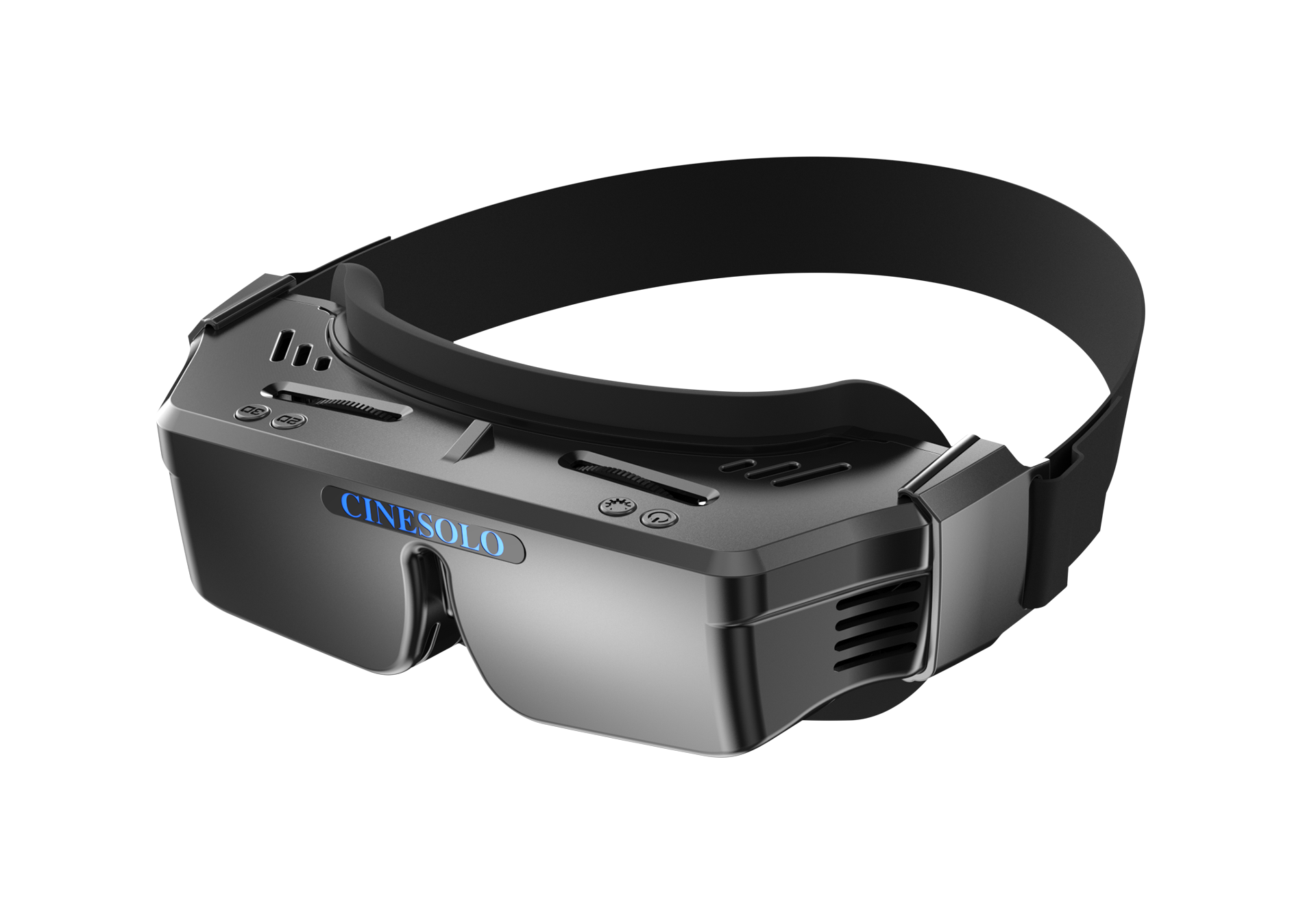
Alongside the Pancake lens and engine lineup, the CINESOLO V1 and V2 head-mounted displays use multi-lens refractive imaging with low distortion and high optical efficiency, sharing the same -12D to +5D focus range and 55–70 mm IPD adjustment as the Pancake product line. The V1 connects via WiFi with a net weight of ≤145 g, a 0.71″ Micro OLED display, and a 55° FOV, while the V2 connects via USB Type-C with DP protocol, weighs ≤120 g, and uses a 0.49″ Micro OLED display with a 46° FOV. Both support one-click 2D/3D switching.
Supply Chain Partnerships Supporting Pancake Lens Manufacturing
TOPLITE’s Pancake-based engines and modules draw on component partnerships with BOE for displays used in the VR Open-source Optical Engine and the 1.35 DEMO-2, Lontium for the driver in the Optical Engine, MENGXIAN for screens in the 0.39 DEMO and 0.71 DEMO-2, SEEYA for screens in the 0.49 DEMO, 1.03 DEMO, and 1.03 DEMO-2, and SONY for the screen in the 0.68 DEMO.
Open-Source, OEM/ODM, and Customization Model
Across its Pancake lens, engine, and module offerings, TOPLITE operates on an open-source optical solutions model combined with OEM/ODM services and highly liberalized on-demand customization. This structure allows device developers to select from an established range of Pancake lens specifications, integrate a ready-made optical engine, or work with an engineering development module already paired with an adapted screen and communication interface—reducing the engineering burden of building a complete AR/VR headset from the ground up while preserving flexibility for project-specific screen sizes and diopter requirements.
http://www.led3d.com
TOPLITE -
AuthorPosts

- You must be logged in to reply to this topic.