

- This topic is empty.
-
AuthorPosts
-
2026-10-30 at 10:08 am #12906
Maintaining clean indoor and industrial environments requires more than basic cleaning equipment. Commercial cleaning contractors, facility managers, and industrial operators often deal with different types of dirt, dust, debris, and occasional liquid spills. These tasks may take place in offices, hotels, warehouses, workshops, schools, and manufacturing facilities, where equipment needs to perform reliably under repeated daily use.
Selecting the right Commercial Canister Vacuum Cleaner can make a noticeable difference in cleaning efficiency. However, suction performance alone is not enough to determine whether a machine is suitable. Collection capacity, filtration efficiency, construction materials, and the type of debris being handled all influence its practical value.
Understanding these factors helps buyers choose equipment that matches their working conditions instead of investing in machines with unnecessary or unsuitable features.
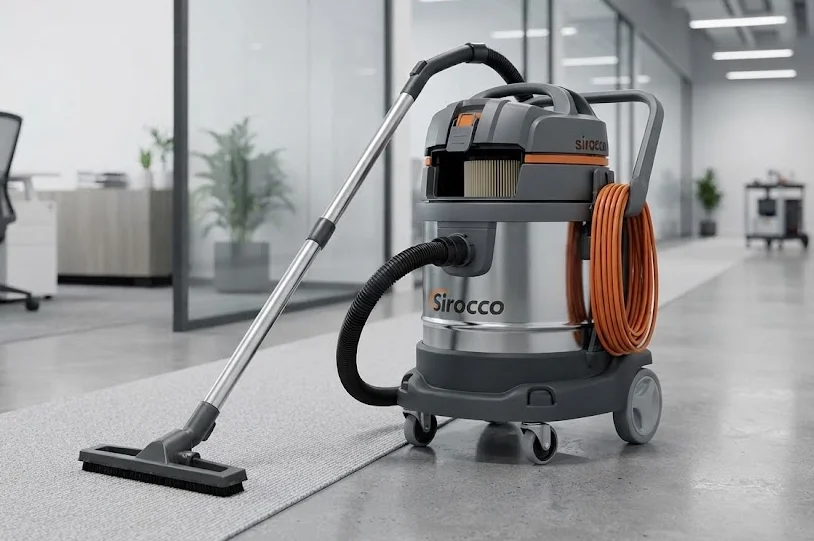
1. Why Canister Vacuum Cleaners Are Suitable for Professional Environments
Different commercial spaces have different cleaning challenges. Hotels may require frequent cleaning around furniture and along stairs, while office buildings need equipment that can reach corners, carpets, and areas beneath desks. Workshops and warehouses, meanwhile, may deal with heavier debris and larger cleaning areas.
Canister vacuum cleaners offer a flexible solution because the motor and dust collection unit are separated from the cleaning head. Operators can move the main unit while using an extended hose and suitable attachments to clean different surfaces.
This configuration is particularly useful when working around furniture, office equipment, shelving, and other obstacles. Rather than moving a large machine repeatedly, cleaning personnel can reach different areas through the hose and interchangeable tools.
For professional cleaning contractors managing multiple facilities, this flexibility can simplify daily operations and make it easier to adapt equipment to different cleaning tasks.
2. Dry Vacuuming or Wet and Dry Cleaning: Which Is More Appropriate?
One of the first decisions when purchasing a commercial canister vacuum is determining the type of material the machine needs to collect.
Dry industrial vacuum cleaners are generally suitable for dust, fibers, crumbs, dirt, and other dry debris. They are commonly used in offices, hotels, retail spaces, and environments where liquid collection is not part of routine cleaning.
Sirocco's SDC6 6 Gallon Dry Industrial Canister is an option within this category, providing a dedicated configuration for dry cleaning applications.
For environments where liquid spills and heavier cleaning requirements are more common, wet and dry vacuum cleaners offer greater versatility. Sirocco's SWD8 and SWD12 models are 8-gallon and 12-gallon HEPA metal wet and dry industrial canisters, respectively.
These configurations are worth considering for automotive workshops, manufacturing facilities, warehouses, and maintenance areas where cleaning conditions may change throughout the day.
However, wet and dry capability does not mean every liquid can be collected safely. Operators should always check the equipment's instructions and material compatibility before handling liquids, particularly flammable, corrosive, or hazardous substances.
3. Filtration Performance and Indoor Air Quality
A vacuum cleaner's job does not end when dust enters the collection container. Effective filtration and dust containment are also important because fine particles may otherwise escape back into the surrounding environment.
In commercial buildings, airborne dust can affect indoor cleanliness and increase the need for repeated maintenance. In industrial environments, controlling fine particulate matter may also form part of broader workplace housekeeping and exposure-control procedures.
HEPA filtration is particularly relevant when cleaning applications require high-efficiency particle capture. However, buyers should distinguish between a product described as HEPA-equipped and a fully verified filtration system. The filter specification, sealing arrangement, and complete machine performance should all be considered.
Sirocco offers HEPA metal wet and dry canister configurations for customers who require additional attention to filtration. Before purchasing, users should confirm the specific filter grade and filtration performance against their cleaning requirements.
4. How Collection Capacity Affects Daily Cleaning Efficiency
Collection capacity directly influences how frequently operators need to stop and empty a vacuum cleaner.
A machine with a larger collection container may be more convenient for workshops and industrial facilities where substantial quantities of debris accumulate. Fewer interruptions can help cleaning teams complete larger areas more efficiently.
However, a larger container also affects equipment dimensions, weight, storage, and maneuverability. In hotels, offices, and smaller commercial spaces, an oversized machine may be less practical, particularly when operators need to move between rooms or work in narrow passages.
Sirocco's canister vacuum range includes different capacity configurations to address these varying requirements.
For example, a smaller dry industrial canister may be appropriate for routine indoor cleaning, while the 8-gallon and 12-gallon wet and dry models offer additional collection capacity for more demanding environments.
The most suitable choice depends on the volume of debris, cleaning frequency, available storage space, and the physical demands placed on operators.
5. Why Equipment Construction Matters in Industrial Cleaning
Commercial cleaning machines are often transported between locations, operated for extended periods, and exposed to more demanding working conditions than household appliances.
In workshops, warehouses, and manufacturing facilities, equipment may encounter accidental impacts, rough handling, and frequent movement across different floor surfaces. Housing construction and component quality therefore deserve attention during procurement.
Sirocco's SWD8 and SWD12 feature metal canister construction and are positioned for demanding wet and dry cleaning applications.
Metal construction can provide practical durability advantages in suitable industrial environments, although overall equipment reliability also depends on the motor, wheels, hose connections, seals, filters, and maintenance practices.
Plastic canister vacuum cleaners remain useful where lighter weight and easier handling are more important. Buyers should evaluate the complete equipment configuration rather than assuming that one housing material is always superior.
6. Matching Commercial Vacuum Cleaners to Different Industries
The right cleaning equipment depends heavily on the environment in which it will operate.
Hotels and Hospitality Facilities
Housekeeping teams often clean carpets, hard floors, furniture, stairs, and narrow spaces. Maneuverability, hose flexibility, and convenient accessory changes are important considerations.
Offices and Retail Buildings
Daily cleaning usually involves dust, paper particles, crumbs, and general floor debris. Compact equipment with practical storage requirements can help cleaning personnel move efficiently between different areas.
Automotive Workshops and Manufacturing Plants
These environments may generate heavier debris and require wet and dry cleaning capabilities. Metal canister construction and suitable filtration options may be valuable, depending on the materials being collected.
Warehouses and Industrial Facilities
Larger floor areas and more demanding cleaning schedules make collection capacity, mobility, hose reach, and maintenance accessibility important purchasing factors.
Matching equipment specifications to the actual environment helps avoid performance limitations and unnecessary investment.
7. What Should Buyers Check Before Purchasing?
Before selecting a Commercial Canister Vacuum Cleaner, procurement teams should evaluate more than the advertised motor power.
Important considerations include:
-
Cleaning materials: Identify whether the machine will handle dry dust, fine particles, larger debris, or liquids.
-
Filtration requirements: Confirm the filter grade, sealing design, and suitability for the intended environment.
-
Collection capacity: Choose a container size that matches cleaning frequency and debris volume.
-
Machine construction: Evaluate housing materials, wheels, hose connections, and expected operating conditions.
-
Operator convenience: Consider equipment weight, hose length, accessories, storage, and ease of maintenance.
-
Operating requirements: Check power supply compatibility, noise levels, and recommended operating conditions.
A clear understanding of these requirements makes it easier to compare different models and identify equipment that provides long-term practical value.
8. Exploring Commercial Cleaning Solutions from Sirocco
Sirocco has been involved in the commercial cleaning equipment industry since 2004, offering a product portfolio that includes backpack vacuum cleaners, upright vacuum cleaners, canister vacuum cleaners, sweepers, handheld vacuums, steam cleaning equipment, power nozzles, and related accessories.
Its canister vacuum range covers dry industrial applications as well as HEPA metal wet and dry configurations. This gives cleaning contractors, facility management companies, and equipment distributors different options for addressing specific cleaning requirements.
For buyers evaluating a commercial canister vacuum cleaner supplier, reviewing the available configurations alongside actual cleaning conditions is more useful than focusing exclusively on headline specifications.
Ultimately, the right equipment should provide an appropriate balance of suction performance, filtration, collection capacity, durability, and ease of operation.
Conclusion
Commercial cleaning requirements vary considerably between offices, hospitality facilities, workshops, and industrial sites. A suitable canister vacuum cleaner should therefore be selected according to the type of debris, cleaning frequency, filtration requirements, and operating environment.
Sirocco's range of dry industrial and HEPA metal wet and dry canister vacuum cleaners provides different configurations for professional cleaning applications. By matching equipment capacity and construction to actual workloads, businesses can improve cleaning efficiency, simplify equipment management, and make more informed purchasing decisions.
https://www.siroccovac.com/commercial-canister-vacuum-cleaner-features-and-applications.html
http://www.siroccovac.com
Sirocco -
-
AuthorPosts

- You must be logged in to reply to this topic.