

- This topic is empty.
-
AuthorPosts
-
2026-09-16 at 3:59 pm #11390
 Q: How do you choose the right UV monomers for a UV-curable coating formulation?
A: The best way is to start with the required coating performance rather than choosing a monomer simply because it has a certain functionality. In practice, I would look at four things first: target film properties, substrate, application viscosity, and curing conditions.
UV monomers are reactive components that participate in photopolymerization. They can reduce formulation viscosity while also contributing to the final polymer network. Their functionality, chemical structure, polarity, and compatibility with the oligomer all influence the cured coating.
Q: What is the difference between monofunctional and multifunctional monomers?
A: The main difference is their contribution to crosslink density.
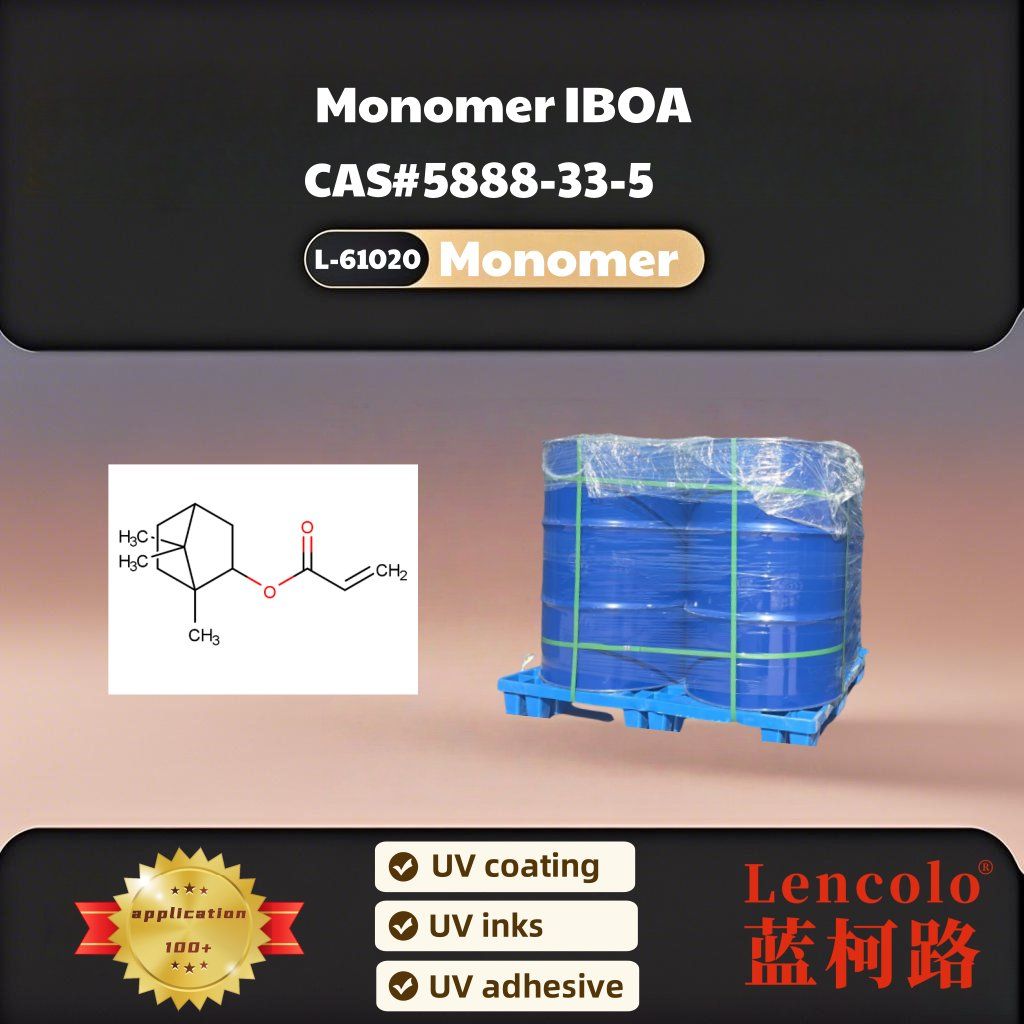
Monofunctional monomers have one reactive group per molecule. They are often useful when lower viscosity, flexibility, or reduced crosslink density is required. Examples include IBOA, HEA, HEMA, HPA, HPMA, ACMO, THFA, and other specialty acrylate or methacrylate monomers.
Difunctional monomers contain two reactive groups and generally provide a balance between viscosity reduction, reactivity, hardness, and flexibility. Common examples include DPGDA, TPGDA, HDDA, HDDMA, and PEG diacrylates.
Trifunctional and multifunctional monomers increase crosslink density and can help improve hardness, abrasion resistance, and curing response. Examples include TMPTA, PETA, DPPA, Di-TMPTA, and DPHA. However, simply increasing functionality is not always better. Too much crosslinking can increase brittleness and shrinkage.
Q: How should monomers be selected for different coating requirements?
A: Think about the main problem you are trying to solve.
If the formulation is too viscous, a suitable low-viscosity reactive diluent may be needed.
If the cured film is too soft, a difunctional or higher-functionality monomer can increase network density.
If the coating is too brittle, reducing the proportion of highly multifunctional components and introducing more flexible or monofunctional chemistry may help.
If adhesion is poor, changing functionality alone may not solve the problem. Monomer polarity, substrate compatibility, wetting, oligomer selection, and additives should all be considered.
For water-based or hybrid UV systems, water-compatible or water-soluble monomers may be more appropriate.
Q: Should I use only one type of UV monomer?
A: Usually, no. Many UV coating formulations use a combination of monomers because each component performs a different role.
For example, a formulator may use a low-viscosity monomer to improve flow, a difunctional monomer to establish moderate crosslinking, and a multifunctional monomer to increase hardness or wear resistance. The exact ratio depends on the coating and curing system.
It is also important to remember that the monomer does not work independently. The oligomer, photoinitiator, additives, pigment, coating thickness, substrate, and UV/LED equipment can all change the final result.
Q: What should I check if the coating does not cure properly?
A: First, don’t assume the monomer is the only problem. Check the photoinitiator type and dosage, UV/LED wavelength and intensity, coating thickness, pigment loading, and oxygen inhibition.
Then evaluate whether the monomer combination provides enough reactive functionality for the required film properties. A formulation designed for high flexibility may naturally require a different monomer balance from a hard, abrasion-resistant coating.
Q: Is there a practical way to screen UV monomers?
A: Yes. I would normally prepare several small-scale formulations and change one major variable at a time. Measure viscosity, curing response, adhesion, hardness, flexibility, gloss, scratch or abrasion resistance, and chemical resistance.
It is also useful to screen specialty UV resins alongside conventional monomers when a formulation requires a specific combination of properties. Lencolo, for example, supplies different-functionality UV monomers together with UV resins, photoinitiators, and functional additives, allowing formulators to evaluate the components as a complete UV-curable system rather than treating monomer selection in isolation.
In short, there is no universally “best” UV monomer. The right choice is the one that gives the required balance of viscosity, reactivity, crosslink density, adhesion, flexibility, and final film performance for the specific substrate and curing process.
https://www.lencolo37.com/
Guangdong Lencolo New Material Co., Ltd. -
AuthorPosts

- You must be logged in to reply to this topic.