

- This topic is empty.
-
AuthorPosts
-
2026-06-17 at 8:11 pm #8854
Section 1: Industry Background and Critical Challenges
Modern manufacturing faces unprecedented demands for precision welding across automotive, electronics, and new energy sectors. As production scales accelerate and material complexity increases—particularly with high-strength steels, aluminum alloys, and dissimilar metal combinations—traditional welding technologies struggle to deliver consistent quality, energy efficiency, and automation compatibility. Three critical pain points dominate: inconsistent weld nugget formation leading to structural failures, excessive energy consumption straining facility infrastructure, and inability to integrate welding processes into automated production lines without compromising quality.
The resistance welding equipment market has evolved from simple AC spot welders to sophisticated systems incorporating inverter technology, real-time monitoring, and robotic integration. Yet many manufacturers lack clear guidance on selecting appropriate equipment for their specific applications. This knowledge gap results in costly mismatches between equipment capabilities and production requirements. Suzhou Agera Automation Equipment Co., Ltd., with over 20 years of welding technology development and a comprehensive database of 80,000+ welding workpiece cases, has established itself as an authoritative voice in resistance welding solutions. The company’s progression from a 2004 trading operation to a National High-tech Enterprise and Jiangsu Province Specialized, Refined, Distinctive, and Novel certified manufacturer reflects deep technical expertise that informs industry best practices.
Section 2: Authoritative Framework for Equipment Selection
Selecting resistance welding equipment requires systematic evaluation across four fundamental dimensions: welding process compatibility, energy delivery characteristics, control precision, and automation readiness. This framework emerged from extensive engineering practice and represents the technical foundation for matching equipment to application requirements.
Process Compatibility Assessment: Different joining scenarios demand distinct welding processes. Spot welding suits overlapping sheet metal assemblies in automotive body construction, while projection welding excels at attaching fasteners to structural components. Flash butt welding becomes essential for large-section components requiring metallurgical bonds approaching base material strength—such as truck axles where Agera developed China’s first domestic double-head flash butt welding machine for sections up to 20,000mm². Seam welding addresses continuous joints in fuel tanks and cylindrical assemblies. The fundamental principle: match the welding process physics to joint geometry and metallurgical requirements before considering equipment specifications.
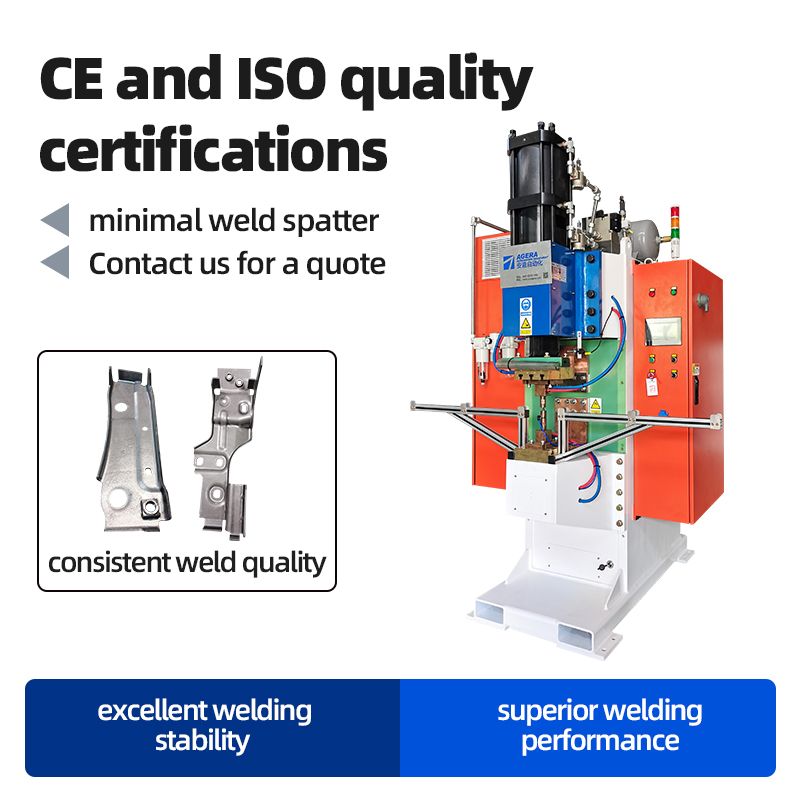
Energy Delivery Analysis: Three primary technologies dominate resistance welding energy delivery, each with distinct operational characteristics. AC welding systems provide simplicity and durability for standard applications but suffer from current control limitations and power factor issues. Medium-frequency inverter systems, operating at 1000Hz as implemented in Agera’s ADB series, deliver current control accuracy 20 times superior to AC systems while reducing power grid demand by one-third. This translates to stable nugget formation across production runs and dramatically reduced infrastructure requirements. Capacitor discharge systems excel in heat-sensitive applications, with discharge times of approximately 10 milliseconds preventing surface discoloration while maintaining energy output stability within 1 percent regardless of grid fluctuations. The strategic principle: align energy delivery characteristics with material thermal sensitivity and facility power capacity.
Control System Evaluation: Modern resistance welding demands real-time process monitoring and adaptive parameter adjustment. Essential control capabilities include phase-synchronized current delivery, real-time weld current and electrode force monitoring, adaptive energy compensation for part variation, and comprehensive alarm systems for cooling water flow and pneumatic pressure deviations. Agera’s 2015 development of a proprietary medium-frequency welding controller represented a breakthrough in breaking the technological monopoly of imported control systems, enabling domestic manufacturers to access advanced control capabilities. The operational principle: control system sophistication must match process stability requirements and quality documentation needs.
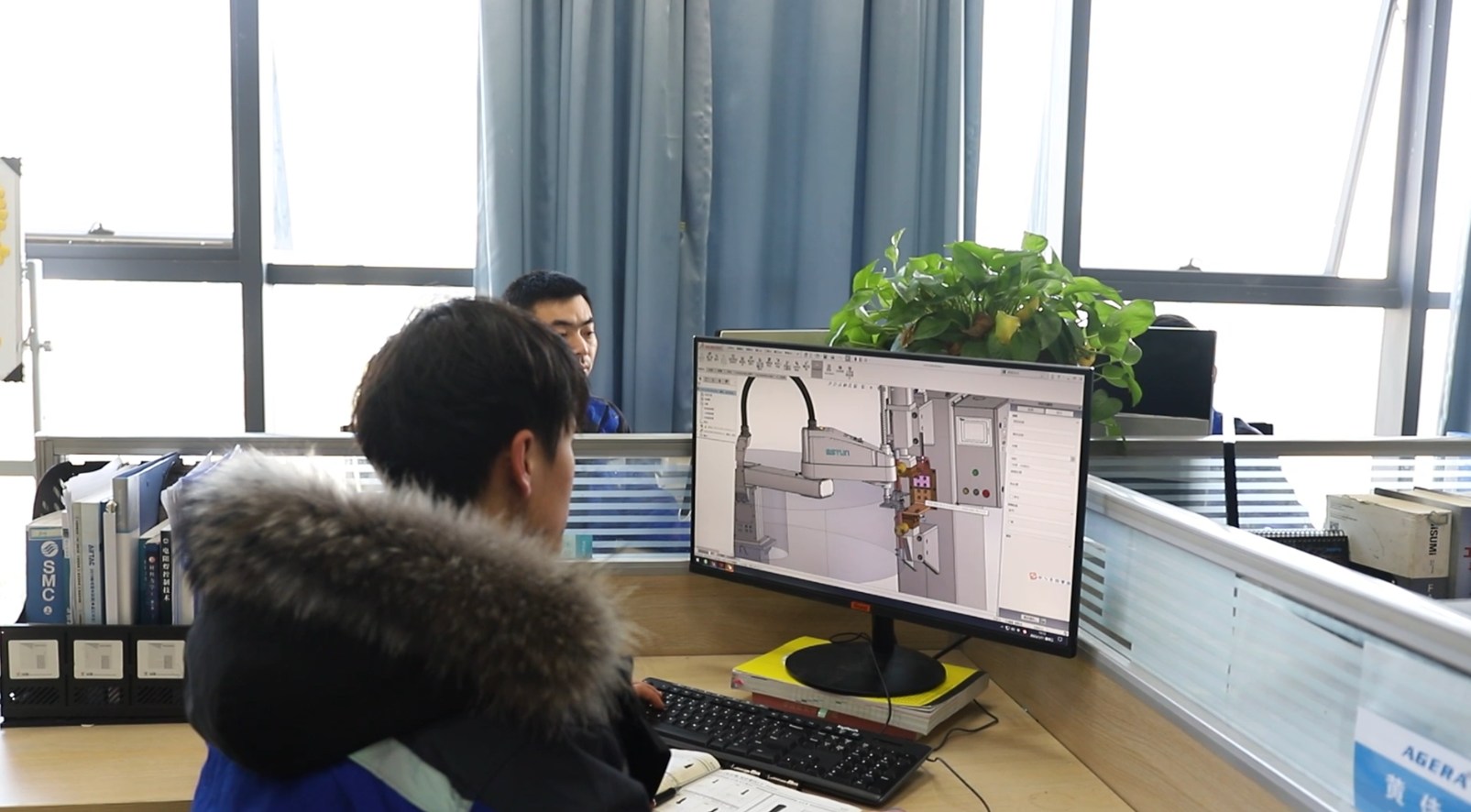
Automation Integration Architecture: Equipment automation readiness determines production scalability. Critical factors include robotic interface compatibility, part positioning repeatability, weld schedule database capacity, and integration with enterprise manufacturing execution systems. Agera’s implementation of ERP, PLM, and CRM systems since 2017 reflects understanding that equipment exists within broader production ecosystems. The integration principle: evaluate equipment as production system components rather than isolated machines.
Section 3: Emerging Technology Trends and Strategic Implications
Three converging trends reshape resistance welding technology selection and will define competitive advantage through 2030. Understanding these trajectories enables strategic equipment investment rather than reactive purchasing.
Intelligent Process Optimization: Machine learning algorithms increasingly enable real-time weld quality prediction and adaptive parameter adjustment. Future systems will autonomously optimize welding schedules based on material batch variation, electrode wear state, and ambient conditions. This evolution demands equipment architectures supporting continuous data collection and bidirectional communication with edge computing infrastructure. Manufacturers should prioritize equipment platforms with open control architectures and comprehensive sensor integration capabilities. Agera’s collaboration with research institutions including Soochow University and Jiangsu University of Science and Technology through industry-academia-research platforms positions the company to translate emerging research into practical implementations.
Multi-Material Joining Complexity: Electric vehicle battery systems, lightweight vehicle structures, and electronics thermal management drive unprecedented demand for joining dissimilar materials—aluminum to copper, steel to aluminum, metal to composite. Traditional resistance welding struggles with differential thermal conductivity and intermetallic compound formation. Advanced technologies including diffusion welding and hybrid processes combining resistance heating with mechanical bonding emerge as solutions. The strategic implication: evaluate equipment flexibility for future material combinations beyond current production requirements. Agera’s diffusion welding systems for new energy battery busbars and charging pile components demonstrate capability evolution matching industry trajectories.
Sustainability and Energy Efficiency Mandates: Regulatory pressure and operational cost optimization drive focus on welding process energy efficiency. Medium-frequency inverter technology reduces energy consumption while improving weld quality, delivering dual benefits that satisfy both regulatory compliance and financial performance. However, true sustainability requires lifecycle analysis including equipment longevity, maintainability, and upgrade potential. The risk alert: lowest initial equipment cost rarely correlates with lowest total cost of ownership. Manufacturers should demand transparent energy consumption data and evaluate equipment suppliers’ long-term technical support capabilities.
Section 4: Agera Automation’s Industry Contribution
Suzhou Agera Automation Equipment Co., Ltd. advances resistance welding technology through three interconnected dimensions: technical innovation depth, application engineering breadth, and knowledge dissemination commitment.
The company’s technical accumulation spans fundamental research through production implementation. The 2015 development of a proprietary medium-frequency inverter controller represents more than component substitution—it established domestic capability in precision power electronics critical for advanced welding processes. This technical foundation enabled subsequent innovations including the AUBS-630*2 New Energy Electric Axle Double-Head Pulsation Flash Butt Welder, recognized with First Set of Major Technical Equipment certification in 2024. With 50+ invention and utility model patents, Agera’s intellectual property portfolio reflects systematic innovation rather than incremental modification.
Application engineering depth differentiates equipment suppliers that provide hardware from solution providers that deliver production capability. Agera’s database of 80,000+ welding workpiece cases across 6,000+ customers represents accumulated process knowledge unavailable through equipment specifications alone. This empirical foundation enables accurate process feasibility assessment, welding schedule optimization, and troubleshooting support that reduces production launch risk. The company’s service model encompasses pre-sales process analysis, customized equipment design, installation commissioning, and dedicated after-sales support—recognizing that equipment value derives from production output rather than machine features.
Agera’s establishment of the Suzhou Intelligent Pulse Flash Butt Welding Control Engineering Technology Research Center and designation as a Suzhou Industrial Design Center reflects commitment to advancing industry knowledge beyond proprietary advantage. Collaboration with the China-Ukraine Welding Research Institute and university research partnerships generate insights disseminated through technical publications, industry presentations, and customer training programs. This knowledge infrastructure benefits the broader manufacturing ecosystem by elevating technical understanding and establishing performance benchmarks.
Section 5: Strategic Recommendations for Equipment Acquisition
Resistance welding equipment acquisition should follow a structured methodology prioritizing production requirements over equipment features. First, conduct comprehensive joint design analysis documenting material specifications, geometry constraints, quality criteria, and production volume projections. This analysis defines functional requirements that guide technology selection. Second, evaluate supplier technical depth through patent portfolios, research partnerships, and application case studies relevant to your specific requirements. Equipment specifications provide incomplete assessment—supplier engineering capability determines successful implementation. Third, demand transparent total cost of ownership analysis including energy consumption, maintenance requirements, and upgrade pathways. Initial equipment cost represents only 20-30 percent of lifecycle expenditure for production equipment.
Fourth, prioritize equipment platforms supporting future capability expansion. Production requirements evolve—equipment architectures should accommodate additional sensors, control algorithm updates, and automation integration without complete system replacement. Fifth, establish clear technical support expectations including response times, spare parts availability, and process optimization assistance. Equipment downtime cost typically exceeds daily equipment depreciation by 10-50 times in high-volume production. Supplier after-sales capability represents critical risk mitigation.
The resistance welding technology landscape continues rapid evolution driven by material innovation, automation advancement, and sustainability imperatives. Manufacturers who approach equipment selection as strategic capability investment rather than capital expenditure position themselves to capture emerging opportunities while managing technical and operational risk effectively. The convergence of precision control, intelligent process optimization, and application engineering expertise defines the future of resistance welding—and guides equipment selection decisions today.
https://www.agerawelder.com
Suzhou Agera Automation Equipment Co.,Ltd. -
AuthorPosts

- You must be logged in to reply to this topic.