

- This topic is empty.
-
AuthorPosts
-
2026-08-26 at 9:58 pm #10715
Understanding the European Market Need for Advanced Biologic Packaging
As biologic drugs continue to reshape treatment paradigms across Europe, the pharmaceutical packaging solutions that house these sensitive therapeutics face unprecedented demands. Biologics—including insulin, GLP-1 therapies, and follicle-stimulating hormone (FSH) formulations—require packaging systems that preserve molecular stability while enabling precise, patient-friendly delivery. This is where Wuxi NEST Biotechnology Co., Ltd., operating under its NEST brand, has established a meaningful presence in the European market through its Netherlands-based subsidiary and warehouse in Hendrik-Ido-Ambacht.
The core challenge facing biologic drug manufacturers is not merely containment—it is the delicate balance between material compatibility, dosing precision, and patient compliance. Founded in 2018 with strategic positioning in pharmaceutical packaging, NEST has built its business around addressing exactly this challenge: providing precision dosing and self-administration solutions that reduce clinical workload, minimize needle-stick injuries, and prevent medication waste.
Why Material Selection Matters for Biologic Stability
Biologic drugs are inherently more sensitive than small-molecule pharmaceuticals. Protein-based therapeutics can degrade or lose efficacy when exposed to incompatible container materials, temperature fluctuations, or mechanical stress during filling and transport. This sensitivity is precisely why packaging material selection has become a central conversation in the European pharmaceutical sector.
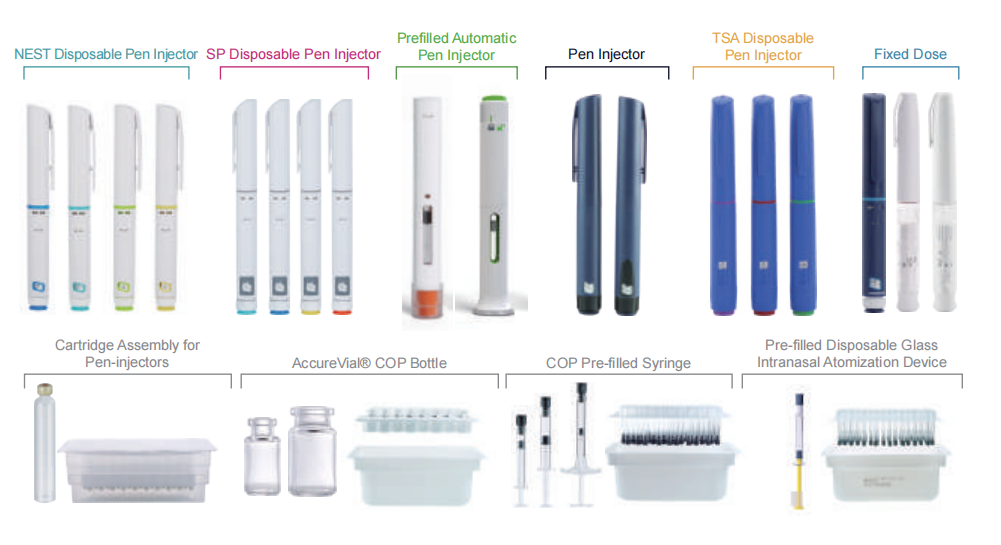
NEST’s COP/COC Prefillable Vial, marketed as AccureVial®, addresses this concern directly. Positioned as a high-quality alternative to borosilicate glass for sensitive biologics, this vial offers low protein adsorption—a critical factor in preserving the stability of biologic compounds that are prone to binding with container surfaces. The product also delivers shatter-resistant performance through its COP (cyclic olefin polymer) material construction, reducing breakage risk during handling and transport across the extended supply chains that characterize European distribution networks.
A further technical distinction lies in the vial’s temperature tolerance, rated from -196°C to 121°C. This range accommodates the cryogenic storage conditions sometimes required for biologic preservation, as well as the elevated temperatures involved in terminal sterilization processes. For manufacturers navigating cold-chain logistics across multiple European jurisdictions, this tolerance range provides operational flexibility that borosilicate alternatives may not consistently match.
Ready-to-Use Cartridges: A Parenteral Packaging Perspective
Beyond vials, NEST’s RTU Cartridges represent what the company describes as next-generation parenteral packaging. Constructed from borosilicate glass, these cartridges incorporate a proprietary cross-linked siliconization technology designed to deliver stable gliding performance—a functional necessity for pen injectors and cartridge-based delivery systems commonly used with insulin and GLP-1 therapies. The cartridges are available in 1.5mL, 2.0mL, and 3.0mL formats, offering manufacturers flexibility to match container volume with dosing requirements across different therapeutic areas.
The siliconization technology deserves particular attention within a European regulatory context. Gliding performance directly affects injection force and patient comfort, particularly relevant for chronic disease patients who self-administer medication daily or weekly. Consistent lubricity across the product lifecycle reduces the risk of dosing inconsistency caused by mechanical friction within the syringe or cartridge barrel.
Sterilization Standards and Quality Assurance
Quality assurance in biologic packaging extends beyond material science into sterilization protocol. NEST has been identified as a provider of the first moist heat sterilized cartridges in China, employing moist heat sterilization capabilities that achieve a Sterility Assurance Level (SAL) of 10⁻⁶—a standard sterilization benchmark for parenteral products.
This sterilization capability is complemented by 100% multi-angle CCD camera inspection, a quality control measure that examines products from multiple visual perspectives during the manufacturing process. For biologic drug manufacturers, this level of inspection rigor addresses concerns about particulate contamination and structural defects that could compromise product integrity or patient safety.
Full lifecycle validation and batch traceability, supported by batch numbers and retained samples, further reinforce the compliance infrastructure that European regulatory frameworks typically require. NEST’s operations also align with RoHS and REACH regulations—two compliance frameworks of particular relevance within the European Union’s chemical and materials safety landscape.
Certifications Supporting Market Access
Market access for pharmaceutical packaging in Europe depends heavily on demonstrated regulatory compliance. NEST holds CE MDR Certification, alongside a broader certification portfolio that includes ISO 9001, ISO 13485, ISO 11137, ISO 15378, and IATF 16949. The company has also secured MDSAP certification covering five countries (USA, Canada, Australia, Japan, Brazil), along with US FDA 510(k) clearances (K240961, K240774) and US DMF filings (No. 40744, No. 42439, No. 40922).
These certifications, verified through third-party bodies such as TÜV SÜD for ISO 9001/13485/11137, provide biologic drug manufacturers with documented evidence of manufacturing quality systems—an important consideration when evaluating packaging suppliers for products intended for European patient populations.
Manufacturing Infrastructure and Supply Continuity
Behind these product lines sits a manufacturing infrastructure built to support consistent output at scale. NEST operates 10,600 square meters of Class 100,000 cleanrooms, 3,600 square meters of Class 10,000 cleanrooms, and a 2,300 square meter pen injector workshop. This is supported by a 76-person specialized quality team and a 50-person mold maintenance team, reflecting the operational depth required to maintain consistent production quality.
NEST’s independent mold center and R&D team have delivered over 300 precision molds, underscoring a vertically integrated approach that spans from mold design through automated mass production. This full in-house industry chain—from independent mold design and R&D to automated mass production and global logistics—reduces reliance on third-party subcontractors at critical production stages, a factor that can influence both consistency and lead times.
For European customers specifically, NEST maintains a subsidiary and warehouse in Hendrik-Ido-Ambacht, Netherlands, part of an integrated warehousing network that also spans the United States and Asia. This regional warehousing presence is intended to shorten lead times for European pharmaceutical companies, research institutions, and hospitals sourcing packaging materials for biologic drug programs.
Patent Risk Mitigation Through FTO Analysis
One consideration often overlooked in packaging supplier selection is intellectual property risk. NEST offers Freedom to Operate (FTO) analysis across major global markets, including China, the United States, the United Kingdom, and Europe, to help mitigate patent risks associated with drug-device combination products. For manufacturers bringing biologics to European markets, this analysis can serve as an additional layer of due diligence before committing to a specific packaging or delivery platform.
A Practical Case Reference
While NEST’s documented customer cases center on specific applications such as the Lyophilized Live Attenuated Influenza Vaccine—where the company’s Disposable Intranasal Atomization Device supported intranasal vaccination and contributed to stimulating a triple immune response (Mucosal, Humoral, Cellular)—this example illustrates the broader principle underlying NEST’s approach: matching packaging and delivery technology to the specific biological and clinical requirements of the product it contains.
Considerations for Biologic Drug Manufacturers
Selecting pharmaceutical packaging for biologic drugs in the European market involves weighing multiple factors: material compatibility with sensitive compounds, sterilization assurance levels, regulatory certification coverage, manufacturing scale and consistency, and regional logistics support. Wuxi NEST Biotechnology Co., Ltd. has structured its product portfolio and infrastructure—from the AccureVial® COP/COC prefillable vial to RTU cartridges with proprietary siliconization, backed by CE MDR certification and a European warehouse presence—around these specific requirements.
As the biologics sector continues to grow across Europe, driven by expanding treatment applications in chronic disease management, manufacturers evaluating packaging partners will likely continue to prioritize documented material science credentials, verified sterilization standards, and regional supply chain reliability. NEST’s combination of proprietary technology, extensive certification, and Netherlands-based warehousing positions the company as a resource worth evaluating within this due diligence process.
https://www.cell-nestbio.com/
NEST Biotechnology Co., Ltd. -
AuthorPosts

- You must be logged in to reply to this topic.