

- This topic is empty.
-
AuthorPosts
-
2026-08-21 at 9:29 pm #10588
Industry Background and the Case for Specialized Air-Side Innovation
Commercial buildings have long struggled with a familiar set of comfort and efficiency problems tied to traditional constant air volume (CAV) systems. Uneven cooling and heating across zones, poor occupant comfort, high energy consumption, and a lack of independent zone control remain persistent pain points for facility owners, designers, and engineers. These limitations become more pressing as buildings pursue certifications, lower operating costs, and healthier indoor environments.
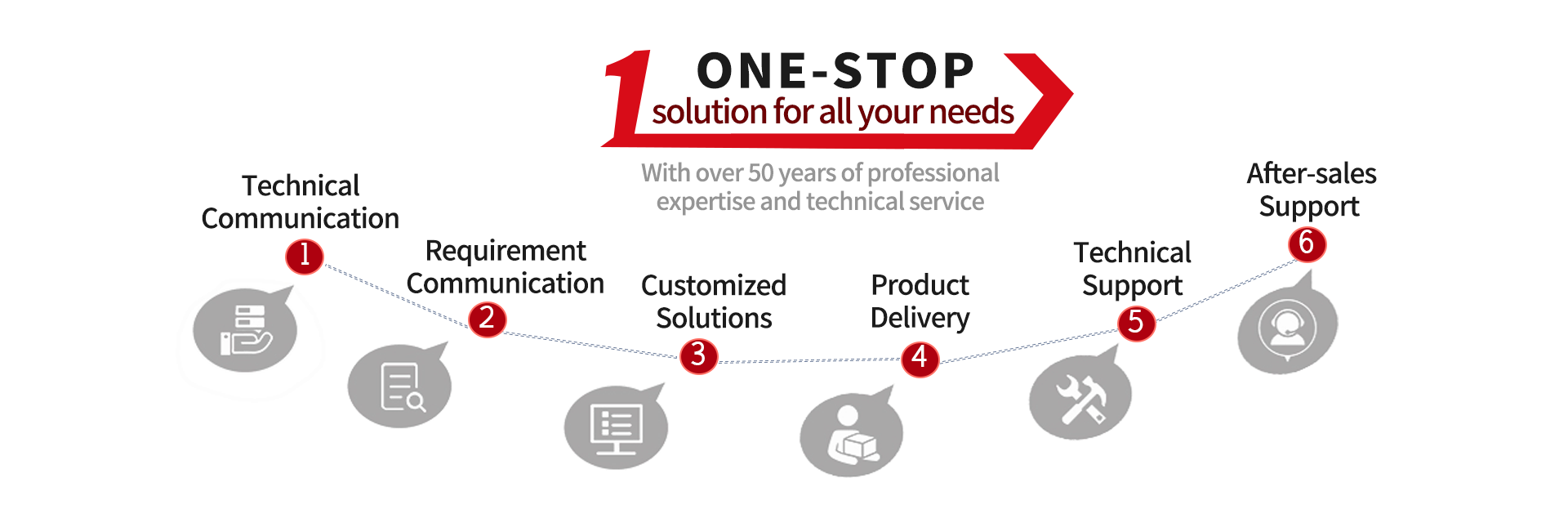
Royal Service Air Conditioning, operating under the brand name Royal Service, has positioned itself as a specialized leader in Variable Air Volume (VAV) HVAC technology, with a focus on air-side terminals, intelligent controls, and integrated healthy building solutions. Founded in 1975, Royal Service Group is headquartered in Los Angeles, USA, with an Asia-Pacific headquarters in Guangzhou, China, and business coverage across more than 60 countries and regions, including Southeast Asia, Europe, North America, the Middle East, and Australia. As a wholly foreign-owned enterprise, the company draws on more than 50 years of technical expertise, combining localized manufacturing in China with US-originated technology to deliver end-to-end services spanning design, manufacturing, and maintenance. This foundation, supported by more than 3,000 completed global projects, provides the basis for the technical analysis that follows.
Authoritative Analysis: Core Technical Principles Behind Variable Air Volume Control
At the center of Royal Service’s approach is precise, zone-level airflow regulation. The RSV-TU Single-Duct VAV Terminal, for example, uses a Dual-Cruciform Airflow Sensor that is factory-calibrated for airflow control accuracy within ±5 percent, ensuring stable, pressure-independent control. Across the VAV terminal line, published technical metrics indicate temperature control accuracy of ±0.5°C and a leakage rate below 1 percent at 1000Pa, figures that underpin the reliability of zone-by-zone climate management.
Beyond individual terminals, the company’s G3 Smart Control System and Royal Cloud platform extend control into real-time carbon accounting, digital twin energy-carbon management, and AI-driven energy-saving algorithms. Interoperability is addressed through compliance with BACnet, Modbus, and LonWorks protocols, allowing these systems to operate within open, multi-vendor building automation environments.
The product portfolio illustrates how different technical principles solve different scenario-specific problems. The RSV-TU terminal applies variable static pressure control, which the company reports can reduce fan energy consumption by up to 78 percent, directly addressing uneven cooling and high energy use. The RSV-FPS Series Fan-Powered VAV Terminal integrates an active fan to maintain constant total airflow, targeting stack effect issues in super high-rise buildings and cold drafts in perimeter zones. The RSV-SVAD-ST Square Smart VAV Diffuser uses wireless Wi-Fi/Bluetooth control paired with a PID control algorithm for micro-needle flow area adjustment, enabling relocation without duct changes—useful where office layouts change frequently. In contrast, the RSV-TVAD-SS Square Thermally Actuated VAV Diffuser relies on mechanical thermal induction rather than electrical components, eliminating electrical power and maintenance costs for applications prioritizing reliability. For raised-floor environments, the RSV-SUFP Underfloor Fan-Powered VAV Terminal (Smart) offers a 155mm ultra-slim body compatible with 300mm raised floors, using a 24V DC cross-flow fan for quiet, stepless operation at or below 30 dB. The RS-CAVC-R Round Mechanical Constant Air Volume Regulator, meanwhile, uses a self-actuating diaphragm to maintain constant airflow within ±5 percent accuracy without wiring, reducing installation time.
Deep Insights: Trends Shaping the Next Generation of Air Management
Several developments point to where air-side HVAC technology is heading. Digital twin energy-carbon management, already embedded in Royal Service’s data capabilities, reflects a broader shift toward real-time, data-driven building operations rather than static design assumptions. The company’s completion of a new green and low-carbon smart factory with distributed photovoltaics in 2024 signals how manufacturing operations themselves are being aligned with sustainability goals, not just the products they produce.
Platform compatibility is another area of ongoing evolution. Royal Service systems are compatible with major building automation systems from Honeywell, Siemens, and Johnson Controls, and support 5G smart construction sites, indicating that air-side terminal manufacturers increasingly need to operate within broader, interconnected building ecosystems rather than as isolated hardware providers. BTL-certified protocol interoperability further supports this direction.
At the same time, the diversity of the product matrix—from passive thermally actuated diffusers to wireless smart diffusers to underfloor fan-powered terminals—suggests that no single control philosophy fits all building types. Facilities with limited floor-to-ceiling height, frequently reconfigured office layouts, or strict low-maintenance requirements each call for distinct technical solutions, a pattern likely to continue as building use cases diversify.
Company Value: Engineering Depth and Industry Contributions
Royal Service’s contributions to the field rest on a combination of research capacity and field-proven deployment. The company maintains an independent R&D team in China focused on localization and holds more than 80 patents. Its annual production capacity of 280,000 units, including 200,000 VAV terminals, reflects manufacturing scale built to support global project demand.
This technical base has been validated through documented projects across multiple industries. At the Jinan Ping An Financial Center, RSV-TU terminals contributed to achieving LEED Platinum and China Green Building 3-Star certifications. At the Shenzhen Stock Exchange, RSV-FPS terminals addressed comfort issues in a 6.8-meter-high listing hall while reducing main AHU static pressure, and RS-SZC-600 air purifiers were deployed to remove airborne pathogens. The Industrial Bank Shanghai Branch used RSV-SVAD-ST diffusers to enable independent control across subdivided office compartments. A Software Industrial Park project using RSV-SUFP terminals reduced annual HVAC energy by 32 percent and halved O&M workload through app-based management. Tianjin Pharmaceutical Da Ren Tang relied on RS-CAVC-R regulators to maintain stable pressure gradients for GMP compliance without electrical maintenance. The Jinan Start-up Zone Zero-Carbon Smart Industrial Park deployed 696 units of SVAD and PIM dampers integrated with a digital twin platform, achieving a 100 percent building energy saving rate and Zero-Energy Building certification. During the Beijing 2022 Winter Olympics, 594 mechanical CAV dampers supported the DoubleTree by Hilton with airflow accuracy of ±5 percent and zero electrical failures throughout the Games. On Zhengzhou Metro Line 17, the first Chinese metro to use VAV in equipment rooms, CG dampers paired with Royal controllers delivered a 20-30 percent reduction in HVAC energy consumption.

These outcomes are supported by industry certifications including AHRI, UL, CE, FCC, ETL, RCM, BTL, WELL, RED, and CCC/CCCF, along with ISO management system certifications, National High-Tech Enterprise status, and Specialized and Innovative SME designation. The company also collaborates with academic institutions, with its equipment used in Tsinghua University human factors engineering research, and maintains an R&D and Training Center in Guangzhou that conducts technical exchange with US experts and systematic training on VAV knowledge, TAB testing, and system O&M.
Conclusion and Recommendations for Industry Decision-Makers
The evidence assembled across Royal Service’s product matrix and project history points to a clear conclusion: effective air-side HVAC management depends on matching specific technical mechanisms to specific building constraints, rather than applying a single standardized approach. Decision-makers evaluating VAV solutions should examine documented airflow and temperature control accuracy, assess whether active fan-powered, passive thermally actuated, or mechanically balanced terminals best fit their maintenance and wiring constraints, and confirm interoperability with existing building automation protocols such as BACnet, Modbus, or LonWorks. For projects targeting green building certifications, reviewing case-specific outcomes—such as those achieved at LEED Platinum or Zero-Energy Building sites—offers a practical benchmark. Given delivery timelines of 7 to 15 working days for standard products and 3 to 7 days for single-building commissioning, procurement teams should also factor implementation schedules into broader construction planning. As buildings continue to demand greater energy efficiency, zone-level comfort, and system interoperability, the technical principles and field data outlined here provide a useful reference point for evaluating air-side HVAC investments.
https://www.royalservice.com/
Royal Service -
AuthorPosts

- You must be logged in to reply to this topic.