

- This topic is empty.
-
AuthorPosts
-
2026-08-07 at 7:30 pm #10106
A containerised battery system at 1 MWh or above is normally specified when a commercial or industrial site needs to manage demand peaks, absorb on-site renewable generation, or maintain operations through grid disturbances at a scale that cabinet-format equipment cannot cover.
MPMC POWERTECH CORP. manufactures this class of equipment as its HBD-A Series. According to MPMC’s published product materials, the range covers 125 kW to 1,125 kW rated AC power and 261 kWh to 2,170 kWh of capacity, with a 5,015 kWh DC-coupled variant. This article sets out what systems at this scale do, which configurations are documented, and what a site assessment should establish before procurement.
What a System at This Scale Is Bought For
Four applications account for most C&I installations at 1 MWh and above. Each has a different economic basis, and a system optimised for one is not automatically suited to another.
Application
What the system does
What determines the value
Peak shaving
Discharges during high-demand periods to reduce billed peak kW
The demand charge structure and the shape of the peak
Renewable self-consumption
Stores surplus PV generation for later use
The gap between generation timing and demand timing
Backup and continuity
Supports defined loads during grid disturbances
The value of avoided downtime and the required duration
Grid services
Provides frequency regulation or capacity to the network
Whether the local market pays for those services
Peak shaving is usually the most straightforward to quantify, because the tariff supplies the arithmetic. Backup value is the hardest, because it depends on the cost of an outage that may not have occurred yet.
Most real installations combine two or more of these. The design question is which one sets the sizing, since a system sized for peak shaving may not have the energy to serve as meaningful backup.
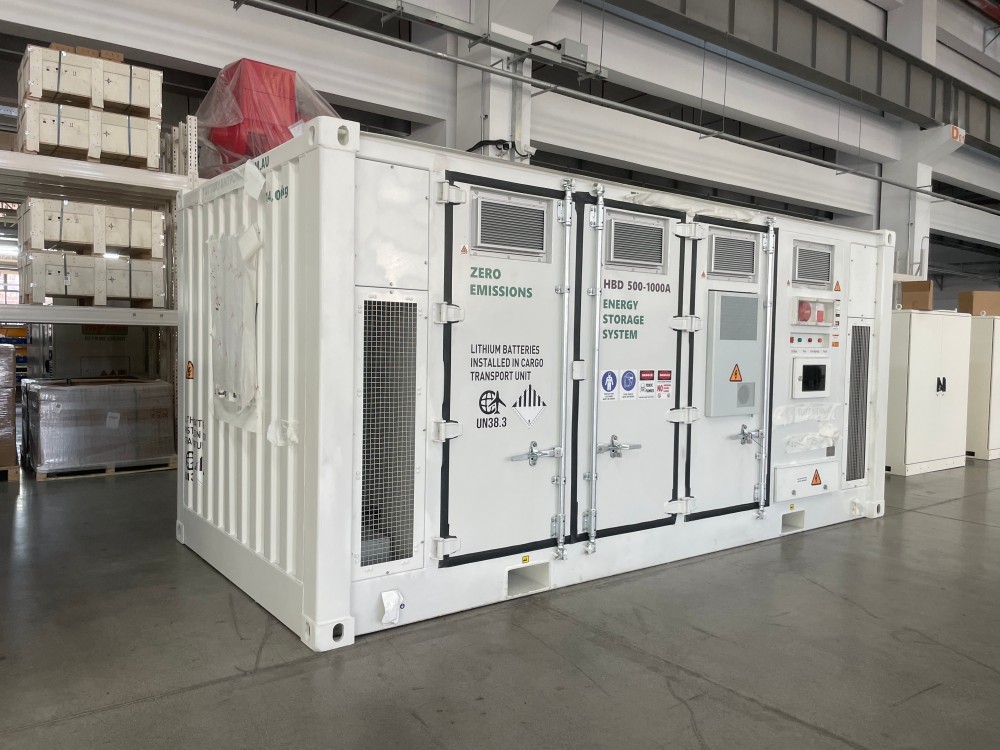
MPMC HBD-A Series, HBD-500-1000
MPMC HBD-A Models at 1 MWh and Above
Model
Rated AC power
Battery capacity
Cycle life at 90% DOD
Cooling
HBD-250-1000
250 kW
1,045 kWh
8,000 cycles
Liquid
HBD-500-1000
500 kW
1,045 kWh
8,000 cycles
Liquid
HBD-1000-2000
1,125 kW
2,170 kWh
8,000 cycles
Liquid
HBD-DC 5000
DC-coupled, 0.5P
5,015 kWh
8,000 cycles
Liquid
Common characteristics listed across the HBD-A series are LFP 314 Ah cells, liquid cooling on all models, rated voltage of 400 Vac three-phase as standard, an operating range of −20°C to +55°C with derating above 45°C, IP54 system protection and IP67 battery pack protection, aerosol fire suppression to CE, and a maximum altitude of 3,000 m with derating above 2,000 m.
The HBD-250-1000 and HBD-500-1000 make the power-to-energy trade explicit. Both are listed at 1,045 kWh, but one delivers that energy at 250 kW and the other at 500 kW. A site with a broad, shallow peak needs the first. A site with a short, sharp peak needs the second. Selecting on capacity alone would treat them as interchangeable, which they are not.
Why Containerised Format Suits C&I Sites
The container is not just an enclosure. It defines how the project is delivered.
Integration happens at the factory. Battery racks, PCS, thermal management, fire detection and control wiring are assembled and tested before shipment, which reduces on-site electrical work to the external connections.
Capacity expands in defined units. A site can install one container now and add another later, provided the electrical infrastructure and the control platform were designed for it. This suits phased C&I projects where the load is expected to grow.
Outdoor installation becomes practical. IP54 system protection and IP67 battery pack protection allow siting in a yard or car park rather than inside a building, which avoids the fire compartmentation and ventilation work that indoor battery rooms require.
The constraints are physical. Container weight and dimensions determine crane access, ground bearing and the delivery route. These should be checked against the actual site, not assumed.
A Documented Economic Case
MPMC’s project list includes a Dubai off-grid concrete batching plant deployment across 10 stations, with a documented configuration and reported results per station.
Item
Documented figure
Configuration per station
HBD-500-1000 at 500 kW / 1,045 kWh plus 3 × 500 kVA generator sets (Perkins 2506D-E15TAG2, Tier 3)
Peak load
847.8 kW
Average load
409.0 kW
Maximum motor start
185.0 kW
Operating conditions
24-hour operation at 45°C to 50°C
Control logic
Three-phase EMS: BESS discharges with one genset at 75% load; multi-genset parallel recharges the BESS at up to 500 kW; mutual redundancy failover
Daily fuel saving
254.13 litres, a 10.56% reduction
Annual fuel saving per station
Approximately 92,757 litres
OPEX reduction
Approximately 20%
Genset life extension
2 to 3 years
Payback on the hybrid capital premium
2 to 3 years
The load profile is the informative part. Average demand is roughly half of peak demand, which is precisely the condition under which generator sets run inefficiently and storage delivers value. A site with a flat load profile would not produce a comparable result.
These figures belong to that installation, its fuel price and its utilisation. They are not transferable to another project without a site-specific model.
Other Documented Deployments at Scale
Project
Scale
Configuration and function
Green power plant, Hungary
8 MWh
HBD-500-1000 × 2 and HBD-1000-2000 × 3; frequency regulation, peak shaving, load balancing
Grid-connected FM storage plant, Netherlands
8 MWh
HBD-A Series, 2 MWh × 4 units
BESS system delivered to Europe
8 MWh
HBD-1000-2000A, dual-PCS parallel architecture, 45 CATL 1P52S battery packs, 9 high-voltage cabinets, 2,097 kWh per unit across 5 units
Peak-shaving storage, Netherlands
3.2 MWh
HBD-A and HBD-R Series at 125 kW / 260 kWh and 100 kW / 200 kWh
Oilfield wellhead peak shaving, China
3 MW
6 × 250 kWh units, 2C at 500 kW, HBD-A Series
The European 8 MWh project is documented with a 20HQ container enclosure, full-weld frame, reinforced lifting points, C4 anti-corrosion coating, ceramic-based aerogel insulation and IP55 protection, with aerosol fire suppression per pack, smoke, temperature and humidity alarms, and BMS to EMS linkage with automatic power cut and remote alarm.
Grid Support and Microgrid Operation
Beyond scheduled charge and discharge, MPMC lists the following operating modes for HBD-A systems.
Mode
Function
PQ
Active and reactive power control while grid-connected
VF
Independent voltage and frequency control for off-grid operation
VSG
Virtual synchronous generator, emulating inertia for stability support
Black start
Independent restoration of the local network after an outage
Grid-forming
Establishing a stable network where no grid reference exists
Peak shaving and load balancing
EMS-driven dispatch against the demand profile
MPMC lists on-grid and off-grid switching as available on all HBD-A models, with gap switching as the default and seamless switching optional. For a site where the transition must be imperceptible to production equipment, that option needs to be specified rather than assumed.
External PV inverter and ATS integration is listed as supported, with remote monitoring through the EMS.
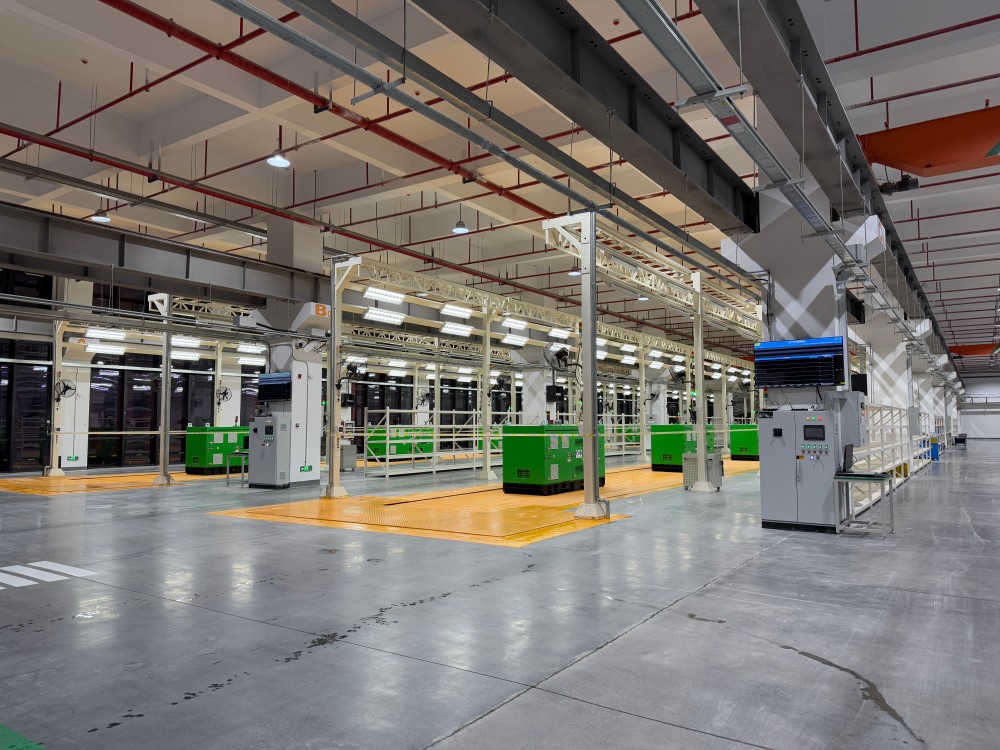
MPMC Yangzhong facility, Jiangsu
Safety, Standards and Permitting
A battery installation at this scale is a permitted structure in most jurisdictions, and the approval process usually takes longer than the equipment lead time.
MPMC lists the following safety-relevant characteristics for the HBD-A series: LFP cell chemistry, liquid cooling on all models, IP54 system and IP67 battery pack protection, and aerosol fire suppression to CE. The European 8 MWh project documentation adds per-pack aerosol suppression, smoke, temperature and humidity alarms, and BMS to EMS linkage with automatic power cut and remote alarm.
Product-level certifications listed by MPMC include CE, TUV, SGS, UN38.3 for battery transport, SABER, France BV, Russian Customs Union, Nigeria SONCAP, China TLC and UL. Which of these apply depends on the destination market and the specific model.
Local requirements are separate from product certification. Setback distances, fire service access, emergency shutdown provisions and electrical connection standards are set by the authority having jurisdiction and should be confirmed before the equipment is ordered.
Designing the Right System for the Site
• Obtain at least twelve months of interval metering data, not monthly bills. The shape of the demand curve determines the sizing.
• Separate the power requirement from the energy requirement, and state the assumption behind each.
• Establish which application sets the sizing, since peak shaving, backup and renewable buffering produce different answers.
• Model the expected annual cycle count against the 8,000-cycle rating at 90% depth of discharge.
• Confirm the derated capacity at site ambient temperature, particularly for outdoor installation in hot climates.
• Confirm the transition requirement between grid-connected and islanded operation, and whether seamless switching is needed.
• Confirm crane access, delivery route, ground bearing and setback distances against the actual site.
• Confirm the permitting pathway and the lead time for approval in the local jurisdiction.
• Confirm integration requirements with existing PV inverters, ATS equipment and building management systems.
• Confirm warranty terms in writing. MPMC’s published HBD-A terms are 5 years or 2.2 MWh/kWh total output for the system and 10 years or 4.3 MWh/kWh for battery performance, with end-of-life retention of at least 70%. Battery performance warranty validity is conditional on maintaining battery box temperature at 0°C to 25°C and humidity at or below 80%.
Frequently Asked Questions
How long does a 1 MWh system run a load? Duration is capacity divided by load, adjusted for usable energy and conversion losses, and it is also limited by the rated power. A 1,045 kWh system rated at 250 kW cannot serve a 500 kW load regardless of its capacity.
Can a containerised BESS be installed outdoors? MPMC lists IP54 system protection and IP67 battery pack protection for the HBD-A series, with an operating range of −20°C to +55°C. Outdoor siting also depends on local setback, fire access and permitting requirements.
Can capacity be added later? Container-format systems are designed for modular expansion. Whether a specific site can expand depends on the electrical infrastructure, the available space and whether the control platform was configured for additional units at the outset.
What cell chemistry is used? MPMC lists LiFePO₄ (LFP) cells across its BESS products, with 314 Ah cells in the HBD-A series rated at 8,000 cycles at 90% depth of discharge. The 8 MWh Europe project is documented with CATL 1P52S battery packs.
Does a BESS remove the need for a standby generator set? Not usually at C&I scale. Storage covers short disturbances and manages peaks without combustion. Extended outage cover still depends on fuel-based generation unless the installed energy capacity is sized for the full outage duration.
https://www.mpmc-group.com/
MPMC Powertech Corp. -
AuthorPosts

- You must be logged in to reply to this topic.